⚠Educational only. Oil heat involves fire, electrical, and carbon-monoxide hazards. Know what is safe to check, and when to stop and call a licensed technician.
Combustion test kit
A burner is set up to numbers, not to the look of the flame. The analyzer reads oxygen, carbon monoxide and stack temperature and works out efficiency. It does not read smoke, so the smoke spot tester stays in the bag beside it. Draft is set before the fire is tuned, and the meter proves the electrical side on a no-heat call.
Some links on this page are affiliate links: as an Amazon Associate this site earns from qualifying purchases, and it may earn from other retail partners, at no extra cost to you.
Parts shown are general references, not specific endorsements. Match any part to your unit's
make, model, and spec before buying.
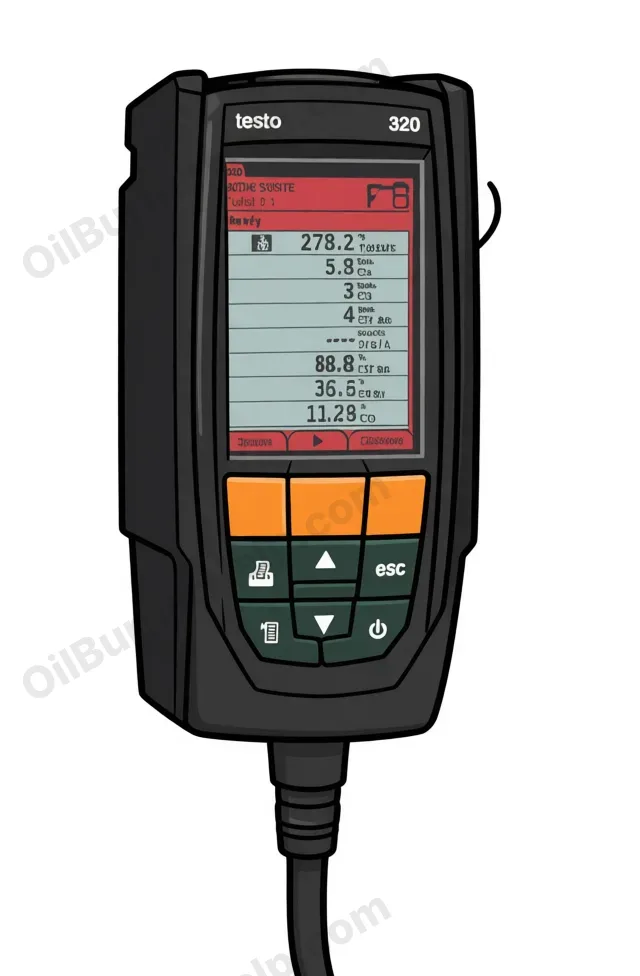
Combustion analyzer
A handheld instrument with a probe that goes in the flue. It reads oxygen, carbon monoxide, stack temperature and draft, and works out the efficiency and the carbon dioxide.
Why it earns its place: It is how a burner gets set up. Air and nozzle are adjusted to what the analyzer reads, not to how the flame looks.
A hand pump that pulls a set volume of flue gas through a paper strip. The spot it leaves is matched to a scale from 0 to 9.
Why it earns its place: An electronic analyzer does not read smoke. A clean, efficient fire still needs a low smoke number, so both come out of the bag.