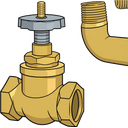
3/8 inch flare fittings
Brass 45 degree flare nuts, unions, elbows and adapters for 3/8 inch outside diameter copper.
Why it earns its place: 3/8 is the common size at the burner and on short runs.
Search Amazon Tech tool
Oil lines are joined with 45 degree flare fittings, never compression fittings. This is the set for a line run or a repair: fittings in both common sizes, the tool that forms the flare, the cutter that makes a square end, the fire valve at the burner, the flex lines that connect it, and the de-aerator that lets a one pipe system bleed itself.
Some links on this page are affiliate links: as an Amazon Associate this site earns from qualifying purchases, and it may earn from other retail partners, at no extra cost to you. Parts shown are general references, not specific endorsements. Match any part to your unit's make, model, and spec before buying.
Brass 45 degree flare nuts, unions, elbows and adapters for 3/8 inch outside diameter copper.
Why it earns its place: 3/8 is the common size at the burner and on short runs.
The same 45 degree family for 1/2 inch outside diameter copper.
Why it earns its place: Longer runs and two pipe systems use 1/2 inch line.
Clamps the tube in a bar and spins a cone into the end to form the 45 degree flare that a flare nut seals on.
Why it earns its place: Oil lines are flare, not compression. This is the tool that makes the joint.
A wheel cutter for copper oil line. The mini fits where the full size cannot turn.
Why it earns its place: A hacksaw leaves burrs that end up in the nozzle. A square cut is the start of a good flare.
A fuel shutoff with a fusible link that closes the oil line automatically in a fire.
Replace it when: It sticks, leaks, or its fusible link has tripped.
Often replaced at the same visit: oil filter, nozzle, pump strainer (in the tune-up kit)
Fusible oil safety valve: how it works and what to buy →
The flexible flare-ended lines that connect the burner (or a de-aerator) to the rigid oil line, so the burner can be swung open for service without unmaking fittings.
Replace it when: Cracked, stiff, kinked or weeping, and whenever the burner is repiped for a de-aerator.
Often replaced at the same visit: de-aerator
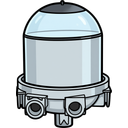
Purges air from the oil line so a one-pipe system self-bleeds after a run-out instead of locking out on air.
Replace it when: Repeated air-in-line lockouts, especially after the tank has run dry.
Often replaced at the same visit: flex oil lines
Fuel oil de-aerator: how it works and what to buy →
A sheet of oil-only sorbent laid under the burner, filter, and pump. It catches the drips from a filter change, a bleed, or a weeping fitting before they soak into the floor and leave the boiler room smelling of oil.
Replace it when: Whenever a pad is saturated or you can smell oil near the burner. Put a fresh one down before a filter change or a bleed, and keep a pack on the shelf.
https://oilburnerhelp.com/gear/oil-line/