Tigerloop de-aerator: a one-pipe oil system that self-bleeds
Updated 18 Oct 2026
Quick answer
A Tigerloop, or tiger loop, is a small de-aerator that turns a one-pipe oil system into a self-bleeding loop, so trapped air is purged automatically instead of locking out the burner. It's the standard fix for a single-pipe system that air-locks after every run-out, and it lets a below-burner tank run on one line instead of two. Fitting one is fuel-line work, so it's a job for a technician.
On this page 6 sections
Some links on this page are affiliate links: as an Amazon Associate this site earns from qualifying purchases, and it may earn from other retail partners, at no extra cost to you. Parts shown are general references, not specific endorsements. Match any part to your unit's make, model, and spec before buying.
What it is
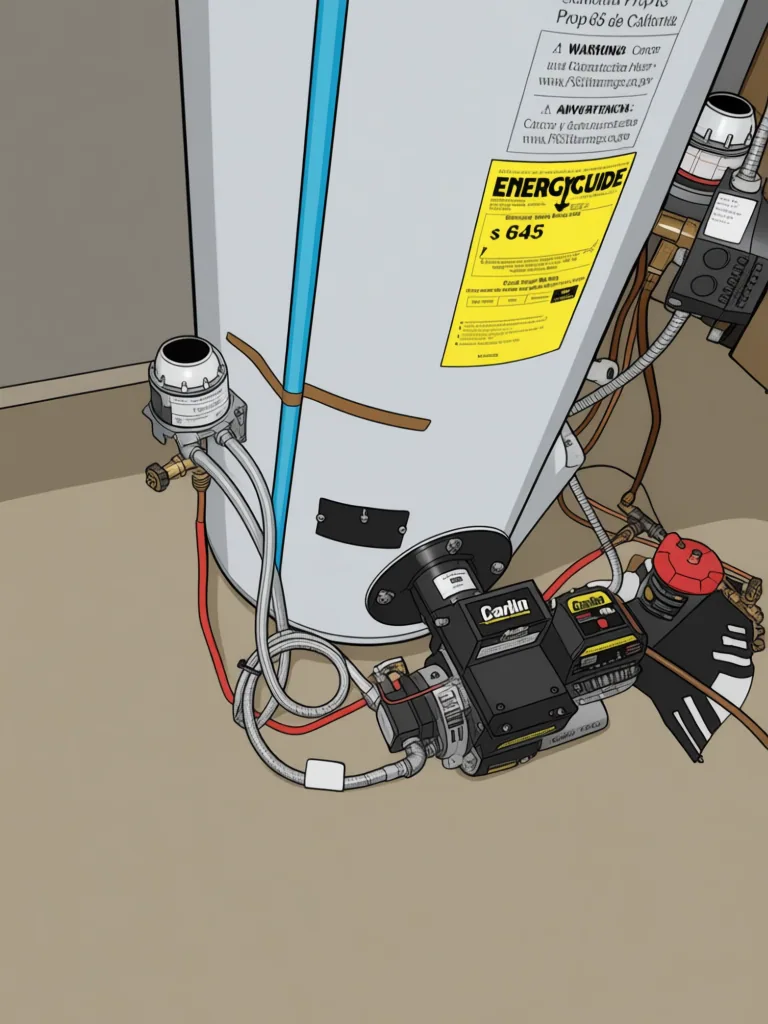
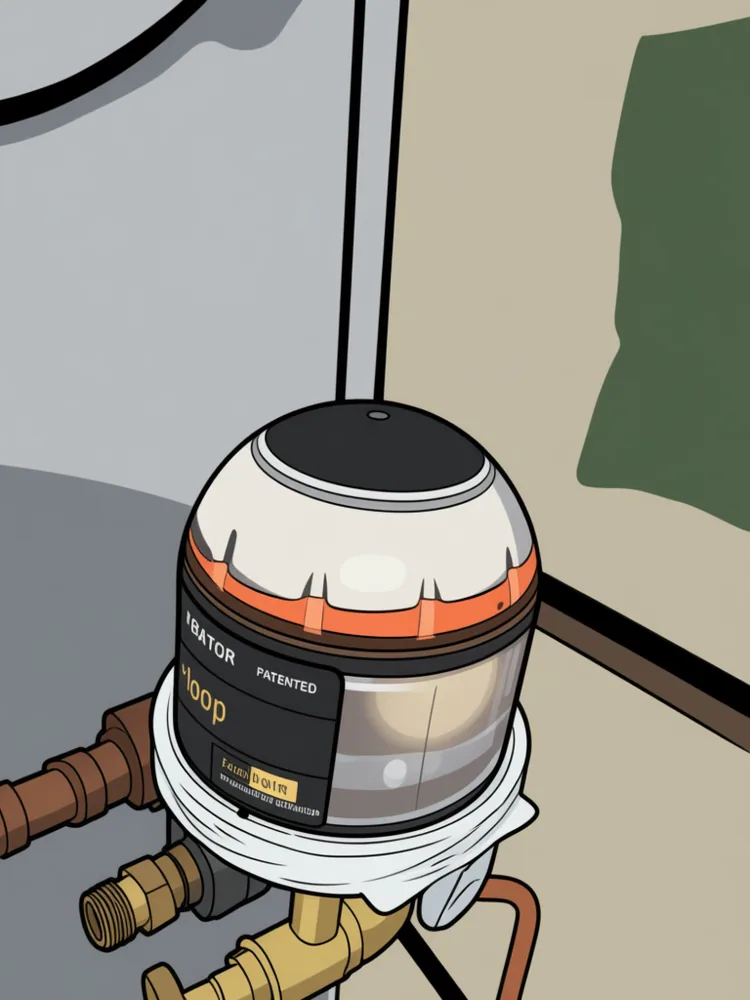
A Tigerloopde-aeratorA small device that removes air from the oil line so a single-pipe system self-bleeds instead of locking out. Tigerloop is the common brand. is the common brand of de-aerator, a small canister plumbed into the oil line right at the burner. Its job is to get the air out of the fuel before it reaches the pump, automatically and continuously, so the burner never tries to fire on an air-locked line. The brand name has become the generic term, the way people say “Tigerloop” for any oil de-aerator.
Why you’d want one
The case for a de-aerator is almost always one of these:
- It self-bleeds after a run-out. On a plain single pipe system, running the tank dry air-locks the line and the burner will not fire until someone bleeds it. A de-aerator purges that air on its own, so a run-out becomes a refill-and-go instead of a service call. If your system locks out every time it gets low, this is the fix.
- It runs a below-burner tank on one line. A tank that sits lower than the burner normally needs a two-pipetwo pipeAn oil supply setup with a supply line and a return line back to the tank, so the pump self-purges air. Common where the tank sits below the burner. setup so the pump can purge air. A de-aerator gets the same result with a single supply line from the tank, which is simpler to run and to insulate.
- It steadies a long or outdoor line. Long suction lines and outdoor tanks pull in more air as the oil warms and cools; the de-aerator keeps that from reaching the pump.
What it is not is a fix for a leak, a bad pump, or a sludged tank. It manages air; it does not paper over a fuel-supply problem.
How it works
The trick is that the de-aerator builds a tiny two-pipe loop that lives entirely between itself and the pump, while only a single pipesingle pipeAn oil supply setup with one line from the tank to the burner pump. Simple, but it can trap air after a run-out, which is why a de-aerator helps. runs all the way back to the tank:
- One supply line runs from the tank to the de-aerator.
- From the de-aerator, a short supply and return pair runs to the fuel pump, which is set up internally for two-pipe operation (its bypass plug installed).
- The pump pulls far more oil than the burner actually burns and sends the excess, full of any entrained air, back into the de-aerator, not all the way to the tank.
- Inside the canister, the air separates out of that recirculating oil and vents off, while the de-aerator draws only enough fresh oil from the tank to replace what the nozzlenozzleThe precision tip that atomizes oil into a fine spray for burning. It is sized by flow rate, spray angle, and pattern. actually burned.
So the burner always sees de-aerated, air-free oil, and the only thing the long line to the tank has to do is top up the loop. That recirculation is why a one-pipe run-out clears itself: the loop purges its own air the moment oil is available again.
Installing it
A de-aerator install is fuel-line work at the burner: the pump has to be converted to two-pipe (its bypass plug set), the lines cut and flared, the canister mounted and primed, and the whole thing leak-checked under pump pressure. Here is the shape of the job so you know what you are paying for:
- Mount the de-aerator near the burner per the maker’s height and orientation rules.
- Set the fuel pump for two-pipe operation (install the bypass plug).
- Run the short supply and return between the de-aerator and the pump, and land the tank’s single supply line on the de-aerator.
- Flare every connection (fuel-rated, no compression fittings on the pressure side), primeprimeGetting oil flowing through the pump and out the nozzle on a dry or air-bound line, done at the pump's bleed port., and bleedbleedPurging air from the oil line at the pump's bleed port so the burner can draw fuel again, usually after a run-out..
- Leak-check every joint under running pressure and confirm the vent works.
The disclaimer, plainly. This is pressurized fuel-line work on a running burner: a bad flare or a missed bypass plug shows up as an air leak, a no-start, or a fuel spill. It is governed by NFPA 31NFPA 31The national standard for installing oil-burning equipment. Most oil-heat install and safety rules trace back to it. and your burner and pump manufacturer’s instructions, and in many places it is permitted work. Treat it as a technician job, or proceed at your own risk with the right tools and the manuals in hand. Nothing here bypasses a safety control; a de-aerator only moves air, and if a “fix” ever calls for defeating the cad cellcad cellThe light sensor that proves a flame is burning. If it cannot see flame fast enough, the primary control locks the burner out., primary controlprimary controlThe small box on the burner that runs the ignition sequence, watches the cad cell, and latches into lockout on a failed start., or a limit, stop and call.
Some links on this page are affiliate links: as an Amazon Associate this site earns from qualifying purchases, and it may earn from other retail partners, at no extra cost to you. Parts shown are general references, not specific endorsements. Match any part to your unit's make, model, and spec before buying.
The tools a tech uses for it: a flaring tool (search Amazon), a set of flare fittings (search Amazon), flare-nut wrenches (search Amazon), fuel-resistant thread sealant (search Amazon), and a fresh oil filter (search Amazon) to finish the job.
Troubleshooting a de-aerator
- Still locking out on air: the pump bypass plug may be missing or the loop reversed, or the unit was not primed. That is an install issue to recheck, not a failed part.
- Weeping at a fitting: a flare that needs reseating. Fuel under pressure is not a place to guess; have it corrected.
- Noisy or chattering: usually air still entering upstream (a loose fitting or a failing line to the tank), which the de-aerator is flagging rather than causing.
Before you buy
The de-aerator itself is in the parts box below. The install parts and tools are the flaring tool, flare fittings and fuel-rated line, flare-nut wrenches, fuel-resistant thread sealant, and a fresh oil filter, linked above. Buy the de-aerator to match your burner’s firing rate and line size, and check the maker’s mounting-height spec before you order.
Frequently asked questions
Does a Tigerloop really stop run-out lockouts?
Yes. Because the de-aerator recirculates oil in its own loop and vents the air, a single-pipe system purges its own air when oil returns, so a run-out becomes a refill instead of a hand-bleed. It does not prevent the run-out itself; keep the tank above a quarter in winter.
Is a de-aerator the same as going two-pipe?
It gives you the air-purging benefit of two-pipe while only running a single line back to the tank. The two-pipe loop exists between the de-aerator and the pump, so the long run to the tank stays one line, which is simpler to install and insulate.
Can I install a Tigerloop myself?
It is pressurized fuel-line work that also requires converting the pump to two-pipe, so it is a technician job in most cases and is governed by NFPA 31 and local code. A capable DIYer with the flaring tools and the manuals can do it, at their own risk, but a leak or a missed bypass plug is the usual result of getting it wrong.
Will a de-aerator fix a burner that keeps losing prime?
Only if the cause is air in the line. If the pump, filter, or tank is the problem, the de-aerator just flags it. Diagnose the fuel supply first; a de-aerator manages air, it does not fix a failing pump or a sludged tank.
What to buy
Some links on this page are affiliate links: as an Amazon Associate this site earns from qualifying purchases, and it may earn from other retail partners, at no extra cost to you. Parts shown are general references, not specific endorsements. Match any part to your unit's make, model, and spec before buying.
Fuel oil de-aerator
Purges air from the oil line so a one-pipe system self-bleeds after a run-out instead of locking out on air.
Replace it when: Repeated air-in-line lockouts, especially after the tank has run dry.
Often replaced at the same visit: flex oil lines
Fuel oil de-aerator: how it works and what to buy →
Flexible oil lines
The flexible flare-ended lines that connect the burner (or a de-aerator) to the rigid oil line, so the burner can be swung open for service without unmaking fittings.
Replace it when: Cracked, stiff, kinked or weeping, and whenever the burner is repiped for a de-aerator.
Often replaced at the same visit: de-aerator
Oil absorbent pads
A sheet of oil-only sorbent laid under the burner, filter, and pump. It catches the drips from a filter change, a bleed, or a weeping fitting before they soak into the floor and leave the boiler room smelling of oil.
Replace it when: Whenever a pad is saturated or you can smell oil near the burner. Put a fresh one down before a filter change or a bleed, and keep a pack on the shelf.
Sources
- Tigerloop (Westwood Products) installation literature
- Suntec / Webster fuel unit (oil pump) bypass and two-pipe documentation
- NFPA 31: Standard for the Installation of Oil-Burning Equipment