Indirect water heater vs tankless coil on an oil boiler
Updated 18 Oct 2026
Quick answer
An oil boiler can make your hot water two ways: an indirect water heater or a tankless coil. A tankless coil heats water on demand inside the boiler, cheap and compact, but it keeps the boiler hot all summer and can deliver scalding spikes (it needs a mixing valve). An indirect-fired water heater is a separate insulated tank the boiler heats; it stores hot water, recovers fast, and is far more efficient year-round, but it costs more to install.
On this page 5 sections
Some links on this page are affiliate links: as an Amazon Associate this site earns from qualifying purchases, and it may earn from other retail partners, at no extra cost to you. Parts shown are general references, not specific endorsements. Match any part to your unit's make, model, and spec before buying.
Two ways a boiler makes your hot water
If you heat with an oil boiler (hot water or steam to baseboards or radiators), the same boiler usually makes your domestic hot water too, and it does it one of two ways. Which one you have, or should put in, drives both your summer fuel bill and how well the showers keep up.
Tankless coil: cheap, compact, thirsty
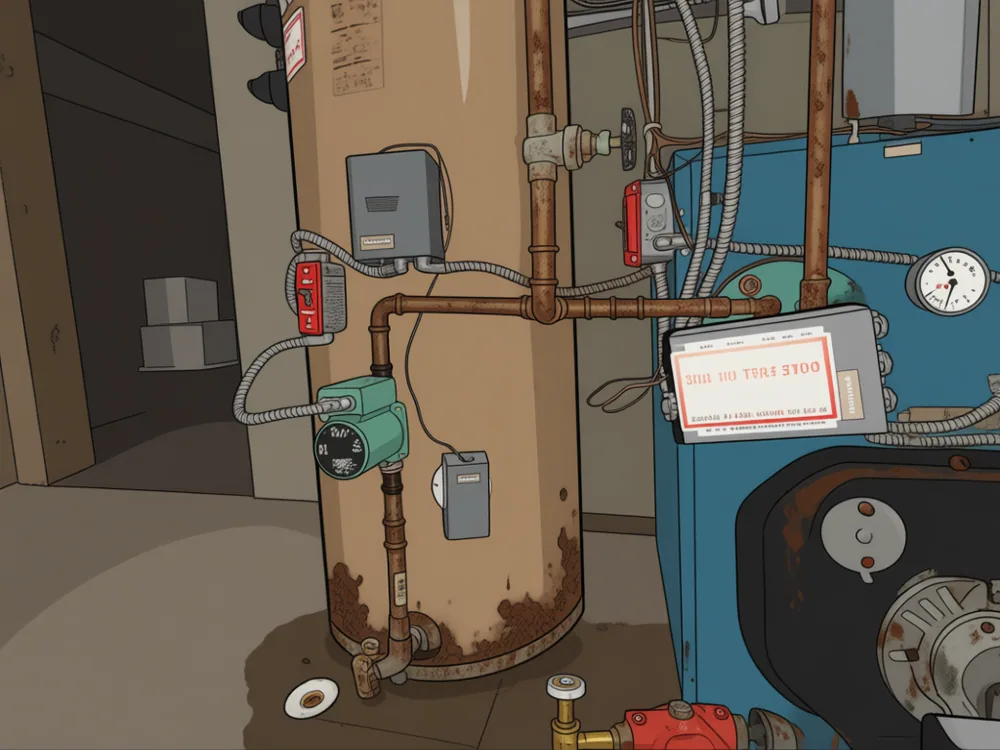
A tankless coil is a copper coil that sits inside the boiler’s water jacket. Tap water flows through the coil, the hot boiler water around it heats it on the way through, and out it comes. No separate tank.
- Upside: cheap (a few hundred dollars in parts), compact, and simple, nothing extra to install in the basement.
- Downside, efficiency: to make hot water on demand, the boiler has to stay hot all year, including all summer when you need no space heat. That standby loss is the coil’s real cost.
- Downside, comfort and safety: recovery is limited (a long shower or two taps at once can outrun it), and the output can spike to scalding temperatures. A tankless coil should always feed through a mixing (tempering) valve that blends it down to a safe tap temperature.
Indirect-fired water heater: efficient, steady, more up front
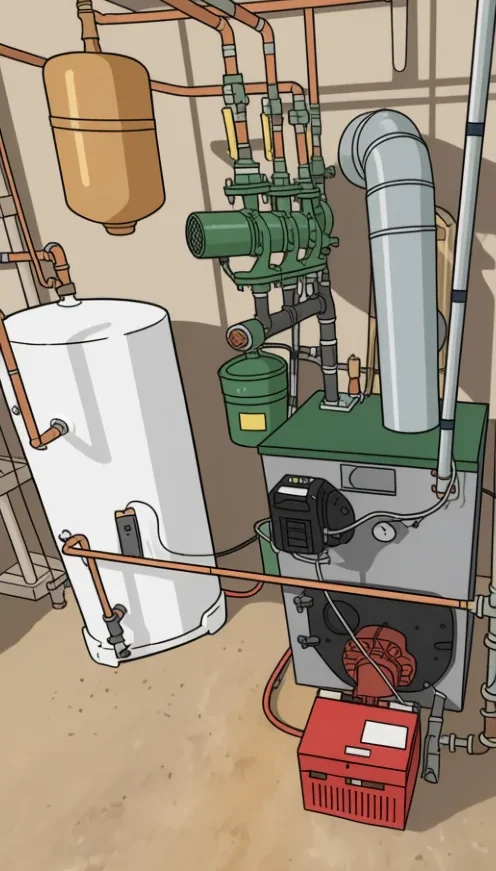
An indirect-fired water heater is a separate, well-insulated tank with its own coil. The boiler heats the water in that tank through a small circulator loop, then shuts off; the tank stores the hot water and the heavy insulation holds it.
- Upside, efficiency: the boiler only fires to reheat the tank now and then, so it can stay cold the rest of the time. Over a year, especially in summer, that is far less fuel than keeping the whole boiler hot for a coil.
- Upside, comfort: a stored 30 to 50 gallons means strong recovery and steady temperature, so showers and laundry do not fight each other.
- Downside: more to buy and install (the tank, a circulator, controls, relief valve, and usually a mixing valve), so it is a real project, not a part swap.
For most homes that use a fair amount of hot water, the indirect’s year-round efficiency pays back the higher install over time, which is why it is the common upgrade from a coil.
Installing either one
Both are boiler and plumbing work:
- A tankless coil is fitted into the boiler’s coil port (the boiler is drained to do it) and plumbed to the house with a mixing valve on the output.
- An indirect is set beside the boiler with a circulator, a zone control or thermostat, isolation valves, an expansion tank, and a temperature-and-pressure relief valve, then plumbed in.
The disclaimer. This is licensed plumbing and boiler work governed by code: the relief valve, expansion tank, and a scald-preventing mixing valve are not optional, and sizing the circulator and controls matters. It is a technician job. The one safety point worth repeating as a homeowner: if your hot water can run scalding (common with a bare tankless coil), a tempering valve is the fix, and that protects everyone in the house.
Comparing the options
Some links on this page are affiliate links: as an Amazon Associate this site earns from qualifying purchases, and it may earn from other retail partners, at no extra cost to you. Parts shown are general references, not specific endorsements. Match any part to your unit's make, model, and spec before buying.
These are install-and-forget appliances rather than off-the-shelf parts, so they are sourced to your boiler and sized to your household, usually by the installer. If you are comparing, look at indirect-fired water heaters (search Amazon) by storage size and at a thermostatic mixing valve (search Amazon) for scald protection on a tankless coil. Get the sizing and the relief and expansion details from a plumber; this is one to spec right rather than to bargain-shop.
Frequently asked questions
Is a tankless coil or an indirect water heater better for an oil boiler?
For efficiency and steady hot water, an indirect-fired water heater usually wins, because the boiler can stay cold between reheats instead of running hot all summer for a coil. A tankless coil is cheaper and more compact but costs more to run year-round and can deliver scalding spikes.
Why does my oil boiler run in the summer?
If you have a tankless coil, the boiler has to stay hot all year to make hot water on demand, so it fires even when no heat is called for. Switching to an indirect-fired water heater lets the boiler stay cold except when the hot-water tank needs reheating.
Is tankless coil hot water dangerous?
It can deliver water hot enough to scald, which is why a tankless coil should always feed through a thermostatic mixing (tempering) valve that blends it down to a safe temperature at the tap. If yours runs scalding, adding that valve is the fix.
Can I install an indirect water heater myself?
No. It involves boiler piping, a circulator and controls, and required safety devices (a relief valve, expansion tank, and mixing valve) under plumbing code, so it is licensed work. What you can do is compare sizes and get itemized quotes.
Sources
- U.S. DOE Energy Saver: tankless coil and indirect water heaters
- Manufacturer literature for indirect-fired water heaters and tankless coils
- Plumbing code guidance on tempering/mixing valves for scald protection