Smart thermostat for an oil furnace: the C-wire catch
Updated 18 Oct 2026
Quick answer
Almost any smart or programmable thermostat works with an oil furnace or boiler, because an oil system is a simple low-voltage call-for-heat circuit. The one catch is the common (C) wire: many older oil installs have only two wires, and Wi-Fi thermostats need constant power, so you either run a C wire, add an adapter, or pick a model that handles two-wire. The wiring itself is low-voltage and homeowner-friendly.
On this page 4 sections
Some links on this page are affiliate links: as an Amazon Associate this site earns from qualifying purchases, and it may earn from other retail partners, at no extra cost to you. Parts shown are general references, not specific endorsements. Match any part to your unit's make, model, and spec before buying.
What it is, and why oil heat makes it easy
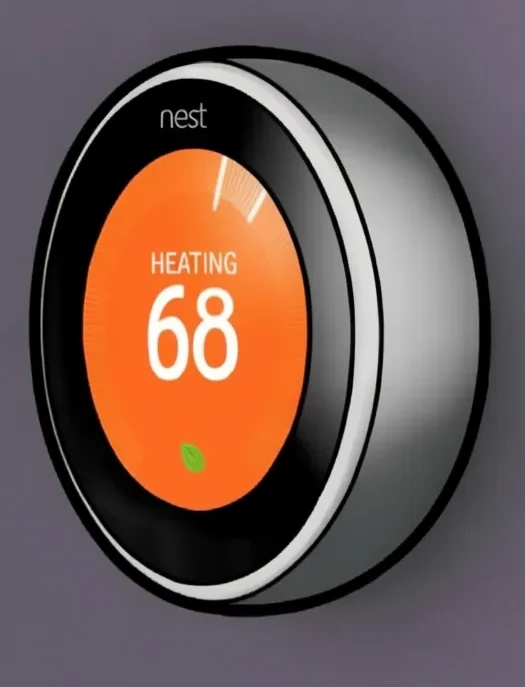
A smart thermostat does the same job as the old dial, it tells the burner when to make heat, plus scheduling, an app, and sometimes learning. The good news for oil homes is that an oil system is about the simplest thing a thermostat can control: a single call for heat. There is no multi-stage compressor, no heat-pump reversing valve, just “make heat” or “don’t.” That is why nearly any thermostat works on oil, whether your burner runs a warm-air furnace or a hot-water boiler.
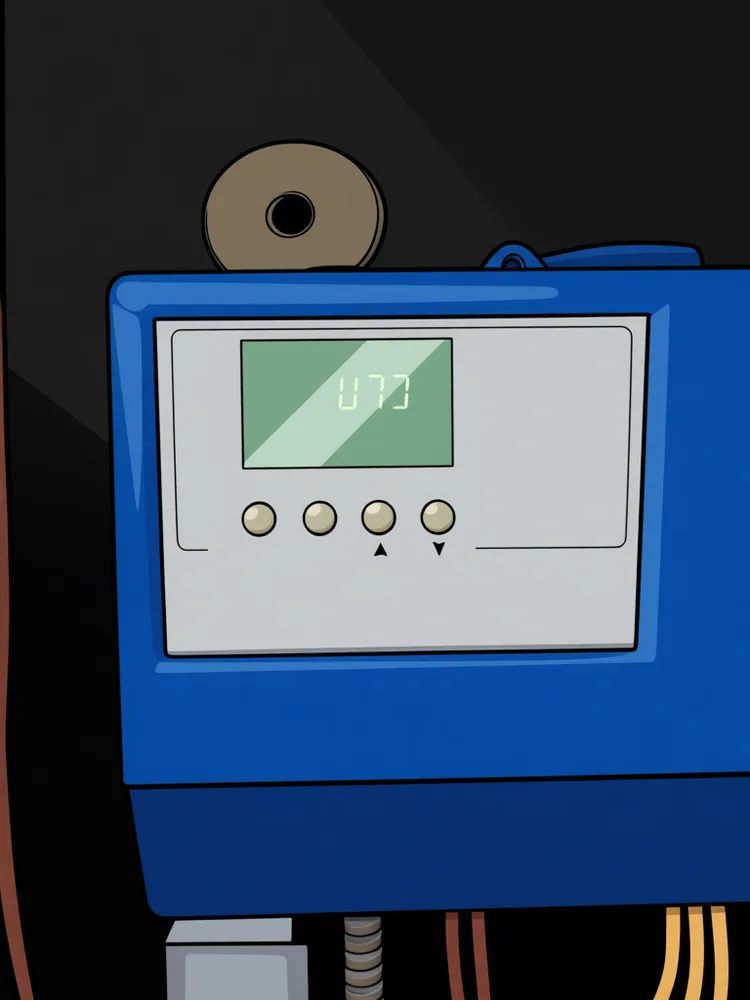
On a furnace the thermostat wires land at the primary controlprimary controlThe small box on the burner that runs the ignition sequence, watches the cad cell, and latches into lockout on a failed start. or fan board; on a boiler they land at the aquastataquastatOn a boiler, the control that reads water temperature to set the high limit and run the circulator.. Either way it is a low-voltage (24 volt) signal, not line power.
The one real catch: the C wire
Old oil systems were often wired with just two wires (R and W): the thermostat just closed a switch, and a simple battery-powered programmable is happy with that. A Wi-Fi smart thermostat, though, needs constant power to run its screen and radio, and it gets that from a common (C) wire. If your wall has only two wires, you have three options:
- Run a new wire. A 4 or 5 conductor thermostat cable from the boiler or furnace to the thermostat gives you a proper C. Easiest if the cable run is accessible.
- Use a C-wire adapter. Many smart thermostats ship with a small add-a-wire module that adds the common at the equipment end using the existing wires.
- Pick a two-wire-friendly model. Some thermostats are designed to run on two wires (with a battery or a power-stealing scheme); check the model’s oil/boiler compatibility before buying.
Installing it (this one you can usually do)
Unlike most pages here, this is genuinely homeowner work, because it is low-voltage:
- Cut power to the burner at the service switch (and the boiler/furnace control), so you are not working a live board.
- Photograph the old wiring before you touch it, then label which wire is on R and which is on W. On oil, ignore terminals for stages or cooling you do not have.
- Mount the new base, connect R and W (and C if you have or are adding it), and set the new thermostat to conventional / oil or boiler heat, single stage, in its setup.
- Restore power and test a heat call.
The honest boundary: the thermostat wiring is safe low-voltage, but if adding a C means opening the burner control or running into the aquastat, that side has line voltage in it, and a wrong landing can damage the control. If you are not sure which terminal is which at the equipment, that end is the part to hand to a technician. And never defeat the system’s limit or safeties to make a thermostat behave; the thermostat only asks for heat, the limits decide when to stop.
Models that work on oil heat
Some links on this page are affiliate links: as an Amazon Associate this site earns from qualifying purchases, and it may earn from other retail partners, at no extra cost to you. Parts shown are general references, not specific endorsements. Match any part to your unit's make, model, and spec before buying.
Real, widely compatible models for oil heat include the Google Nest (search Amazon), ecobee (search Amazon), and the
Honeywell Home (search Amazon)line; for a no-C, no-app option a simple
battery-powered programmable (search Amazon)is the most foolproof on a two-wire system. If you want Wi-Fi and have only two wires, buy a model that includes a C-wire adapter or plan to run a new cable.
Frequently asked questions
Will a Nest or ecobee work with an oil furnace or boiler?
Yes. Oil heat is a single call-for-heat circuit, which both support as conventional heat. The only common hurdle is the C (common) wire for constant power; use the included adapter, run a C wire, or choose a two-wire-friendly model.
What is the C wire and do I need it?
The C (common) wire gives a thermostat constant 24-volt power. Battery programmables do not need it, but Wi-Fi smart thermostats do. Many older oil installs have only R and W, so you add a C wire, use an adapter, or pick a model built for two wires.
Can I install it myself?
The thermostat wiring is low-voltage and very doable: cut power, photograph and label the wires, land R and W (and C), and set it to conventional oil/boiler heat. If adding the C wire means working inside the burner control or aquastat, that side has line voltage and is better left to a technician.
Will a smart thermostat save oil?
Scheduling setbacks when you are asleep or out can trim fuel use, but the savings are modest and depend on your habits and home. The bigger fuel savers on oil are an annual tune-up and a well-set draft, not the thermostat alone.
Sources
- Honeywell/Resideo, Google Nest, and ecobee oil/boiler compatibility documentation
- Oil-heat control-wiring references (aquastat and primary control thermostat terminals)