Oil furnace filter: spin-on vs cartridge, and changing it
Updated 18 Oct 2026
Quick answer
An oil furnace filter, the fuel oil filter on the oil line, catches sludge and water before they reach the pump and nozzle, and a clogged one is a classic cause of hard starts and lockouts. The common upgrade is a spin-on filter (like the General 2A-700), which filters finer than an old cartridge and is far easier to change. Changing a cartridge is doable for a careful homeowner; the line is the bleed and the small fuel spill.
On this page 4 sections
Some links on this page are affiliate links: as an Amazon Associate this site earns from qualifying purchases, and it may earn from other retail partners, at no extra cost to you. Parts shown are general references, not specific endorsements. Match any part to your unit's make, model, and spec before buying.
What it is and why it matters
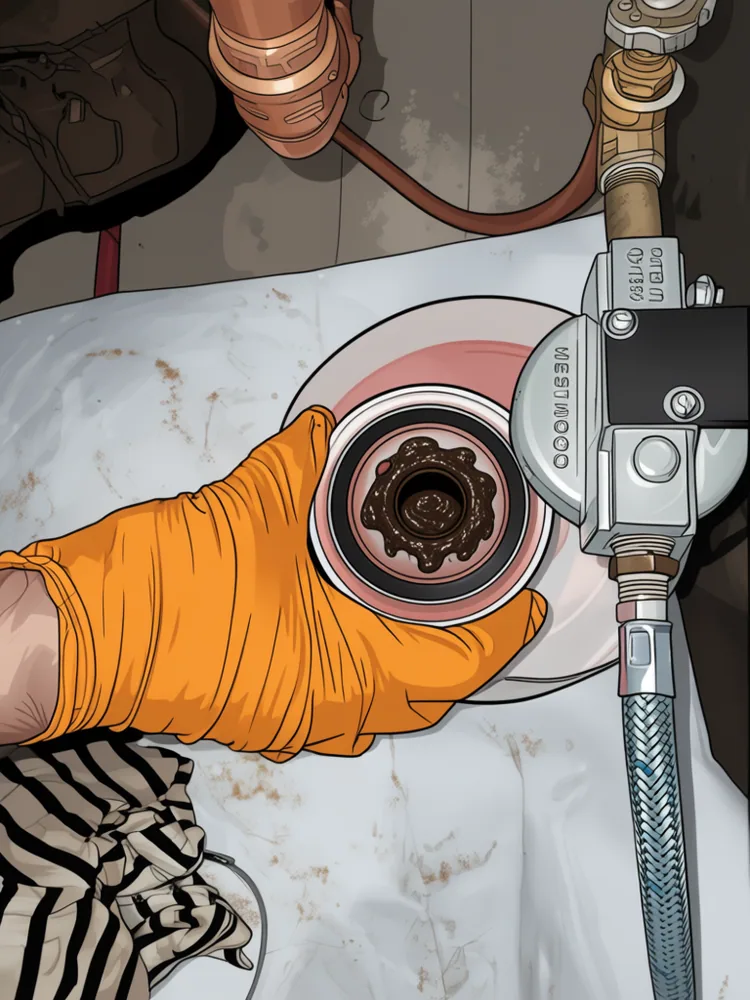
The fuel oil filter sits in the oil line between the tank and the burner, and it catches the sludge, rust, and water that the tank inevitably sheds before any of it reaches the pump and the nozzle. Those parts have tiny, precise passages, so the filter is what stands between a clean fire and a fouled one. A neglected, clogged filter is one of the most common causes of a burner that starves, hard-starts, or locks out, especially after a run-out drags sludge toward the pickup.
Spin-on vs cartridge: the upgrade
There are two common styles, and the trend is from the first to the second:
- Cartridge filter (the classic, e.g. a General 1A-25): a metal canister with a replaceable paper element inside. It works, but changing it means opening the bowl, pulling the messy element, cleaning the bowl, and reassembling, more steps and more chances to leave it weeping.
- Spin-on filter (e.g. a General 2A-700): a sealed canister that threads on like a car oil filter. It filters finer (down to a few microns), and changing it is one wrench turn and a new canister, so it actually gets changed on schedule.
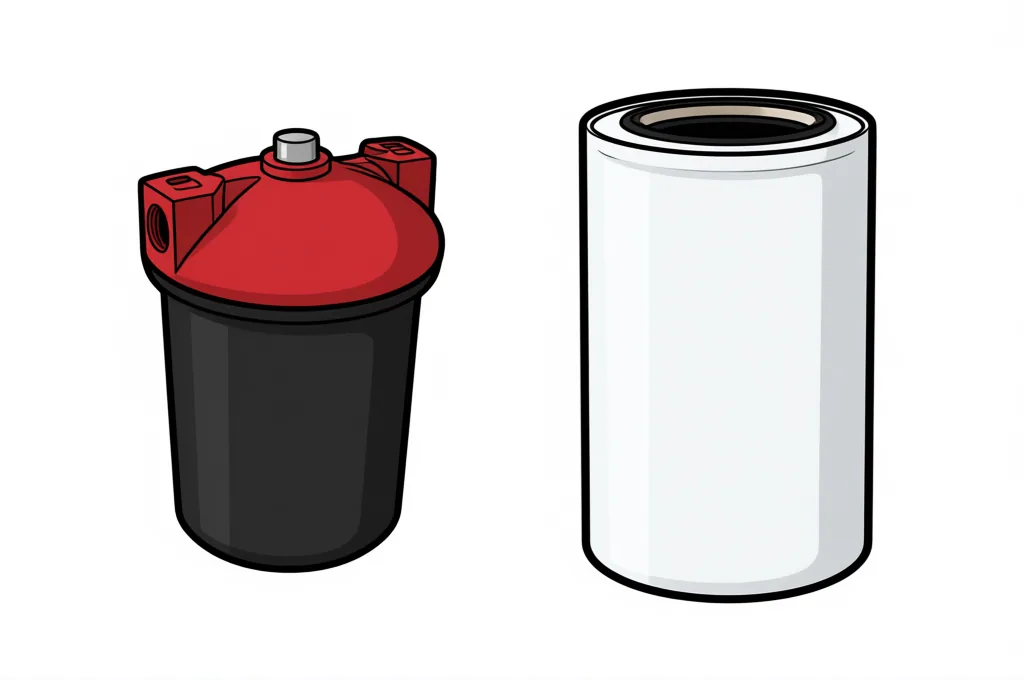
Upgrading from a cartridge to a spin-on usually means a tech fits the spin-on base/adapter once; after that the changes are trivial. The conversion itself is light fuel-line work.
How a homeowner changes a filter
This is the most homeowner-doable hands-on job on an oil system, and since it is everywhere online, here is the careful version. Read the boundary at the end first.
- Close the tank shutoff valve so oil cannot flow while the filter is open. This is the step that keeps a change from becoming a spill.
- Put a pan and rags under the filter; there is always some oil in the bowl or canister.
- Change it. Cartridge: unbolt or unscrew the bowl, remove and bin the old element, wipe the bowl, fit the new element and a new gasket, reassemble. Spin-on: unscrew the old canister, lightly oil the new gasket, thread the new one on hand-tight plus a bit.
- Open the tank valve and watch for leaks.
- BleedbleedPurging air from the oil line at the pump's bleed port so the burner can draw fuel again, usually after a run-out. the line. Opening the filter introduces air, so the burner usually needs a quick bleed at the pump to re-primeprimeGetting oil flowing through the pump and out the nozzle on a dry or air-bound line, done at the pump's bleed port..
The boundary. Closing the valve, swapping the element, and a new gasket are reasonable homeowner work with a pan and patience. The two things that catch people are the bleed afterward (pressurized fuel and a running burner, covered in its own guide) and not closing the valve first. If the bleed is not for you, this is a standard part of an annual tune-up, and many people simply let it ride with the service visit. Nothing here defeats a safety; a filter is just filtration.
Tools for the job
Some links on this page are affiliate links: as an Amazon Associate this site earns from qualifying purchases, and it may earn from other retail partners, at no extra cost to you. Parts shown are general references, not specific endorsements. Match any part to your unit's make, model, and spec before buying.
The filter and a tank treatment are in the parts box below. Match the cartridge to your housing (a General 1A-25 is the common cartridge) or buy a General 2A-700 spin-on if you have the spin-on base. The job also wants a fresh filter wrench (search Amazon) for spin-ons and a band of water-finding paste (search Amazon) to check whether water in the tank is what keeps loading the filter.
Frequently asked questions
How often should the oil filter be changed?
At least once a year, normally as part of the annual tune-up, and again after a run-out (which drags sludge into it). A filter that is years overdue is a common cause of a burner that starves or locks out.
Is a spin-on filter better than a cartridge?
For most homes, yes: a spin-on like the General 2A-700 filters finer and changes in one wrench turn, so it tends to actually get serviced on time. The cartridge style still works, but it is messier to change.
Can I change the oil filter myself?
The change is doable: close the tank shutoff valve first, catch the oil in a pan, swap the element with a new gasket, then open the valve. The catch is that opening the filter lets air in, so the line usually needs to be bled and re-primed, which is the part many people leave to the tune-up.
Why does my filter keep clogging?
Repeated clogging usually means sludge or water in the tank. Check for water with a paste-coated stick, treat the tank, and have it pumped and cleaned if there is more than a trace. The filter is catching a tank problem.
What to buy
Some links on this page are affiliate links: as an Amazon Associate this site earns from qualifying purchases, and it may earn from other retail partners, at no extra cost to you. Parts shown are general references, not specific endorsements. Match any part to your unit's make, model, and spec before buying.
Oil filter and cartridge
Catches sludge and water before they reach the pump and nozzle. The cartridge is a routine wear item changed at every tune-up.
Replace it when: Every tune-up, after a run-out, or whenever the burner starves for fuel.
Often replaced at the same visit: nozzle, pump strainer (in the tune-up kit), oil safety valve
Common: General 1A-25 cartridge, General 2A-700 spin-on
Oil filter and cartridge: how it works and what to buy →
Oil tank treatment
An additive that disperses water, controls sludge, and inhibits the microbes that grow at the oil and water line in a tank.
Replace it when: Seasonally, or when sludge or water has been a known problem in the tank.
Oil absorbent pads
A sheet of oil-only sorbent laid under the burner, filter, and pump. It catches the drips from a filter change, a bleed, or a weeping fitting before they soak into the floor and leave the boiler room smelling of oil.
Replace it when: Whenever a pad is saturated or you can smell oil near the burner. Put a fresh one down before a filter change or a bleed, and keep a pack on the shelf.
Sources
- General Filters product literature (1A-25 cartridge, 2A-700 spin-on)
- Oil-heat service guidance on fuel filtration
- NFPA 31: Standard for the Installation of Oil-Burning Equipment