Oil furnace maintenance: tune-up checklist and cost
Updated 18 Oct 2026
Quick answer
Oil furnace maintenance comes down to one real tune-up a year, the same visit a boiler needs: it replaces the nozzle and filters, cleans the heat exchanger and flue passages, checks electrodes and controls, and ends with an instrumented combustion test, for about $150 to $400. Skipping it is how soot, lockouts, and 2 a.m. no-heat calls happen; oil burners are not a no-maintenance appliance.
On this page 8 sections
Why oil burners need an annual visit (and gas often skips it)
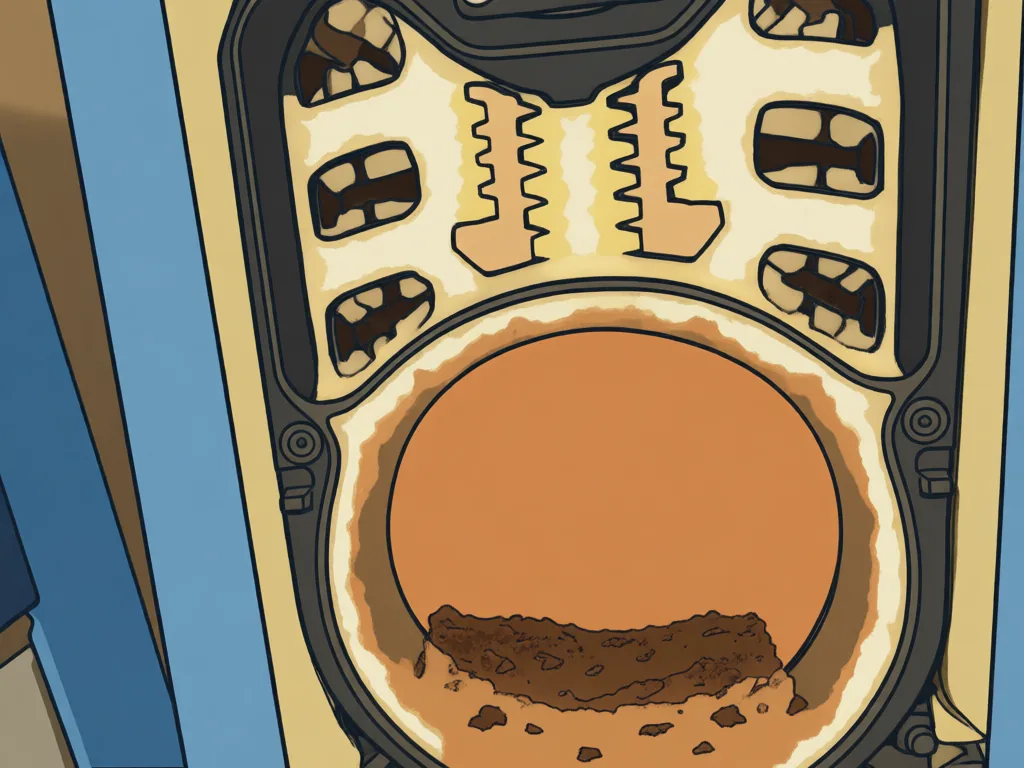
No. 2 oil leaves more residue than gas when it burns, and a burner’s settings drift over a season as the nozzlenozzleThe precision tip that atomizes oil into a fine spray for burning. It is sized by flow rate, spray angle, and pattern. wears and soot builds. One season of that costs real efficiency: a sooted heat exchangerheat exchangerThe metal chamber that passes combustion heat into your home's air or water while keeping the fumes separate. A crack in it is a carbon monoxide hazard. insulates the very surface that is supposed to transfer heat, so you burn more oil for the same warmth. An annual tune-up resets all of that before the heating season, which is why oil dealers and manufacturers treat it as routine, not optional.
The full checklist, item by item
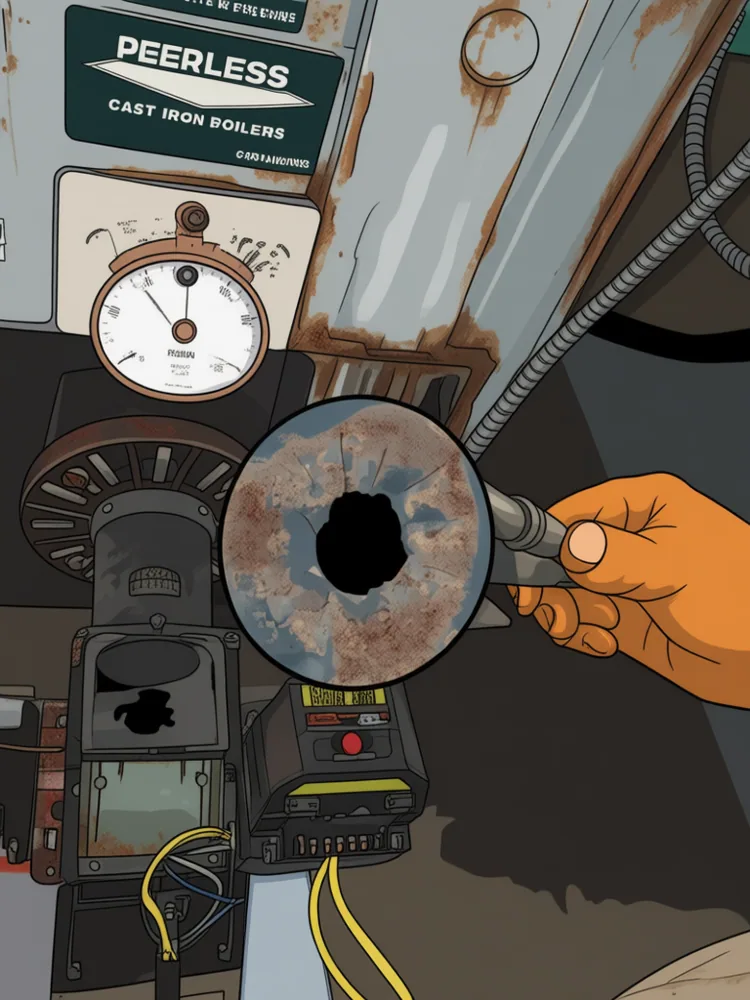
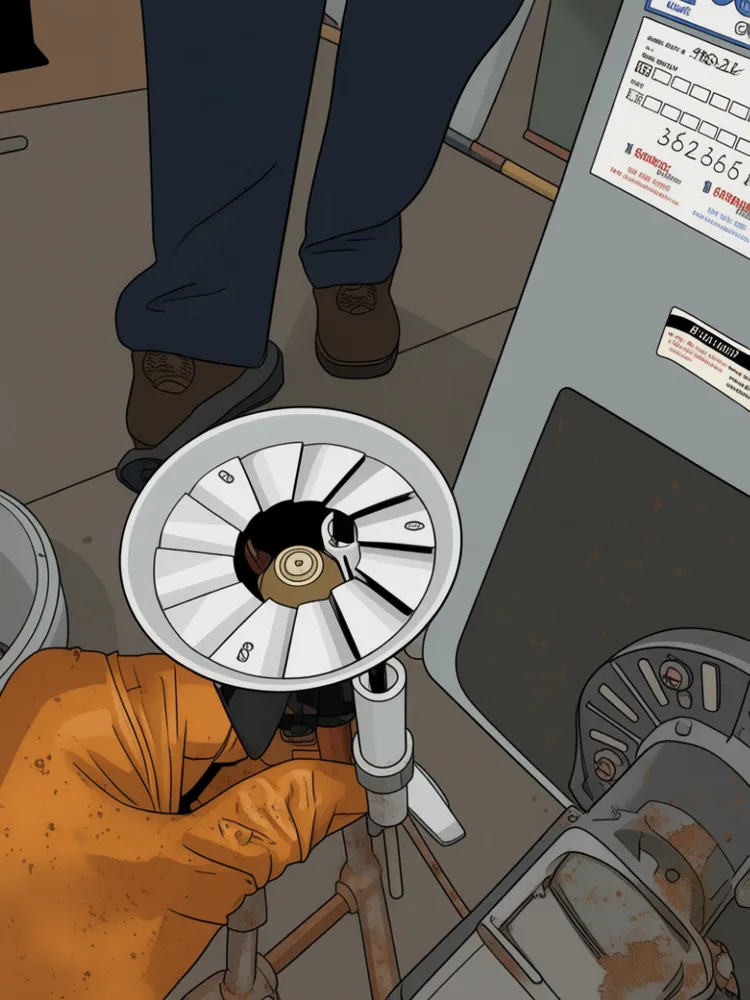
A thorough tune-up is a list, not a glance. Here is what a good one covers and what each item prevents:
What a real tune-up covers
Every line here is technician work. The value of the visit is that all of it happens, not any single item.
| Item | What the tech does | What it prevents |
|---|---|---|
| Nozzle | Replace with the spec GPH, angle, and pattern. |
|
| Oil filter and pump strainer | Replace cartridge, clean strainer. |
|
| Electrodes | Inspect, re-gap, replace if worn or cracked. |
|
| Cad cell | Test resistance in light and dark, clean and re-aim. |
|
| Heat exchanger and flue | Brush and vacuum the passages. |
|
| Barometric damper and draft | Check and set draft with a gauge. |
|
| Combustion test | Measure smoke, draft, CO2/O2, stack temp; tune to spec. |
|
| Controls and safeties | Test the primary control, limit, and (boiler) low-water cutoff. |
|
| Warm-air filter (furnaces) | Replace the blower return filter. |
|
| Tank and lines | Inspect for leaks, sludge, and corrosion. |
|
The combustion test is the tune-up
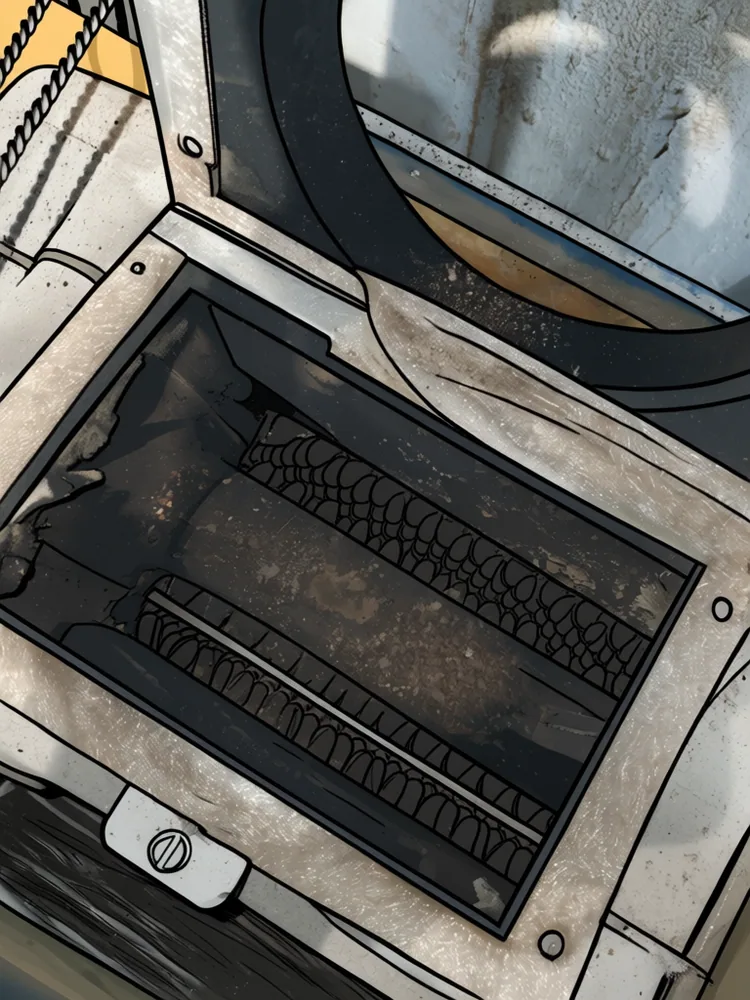
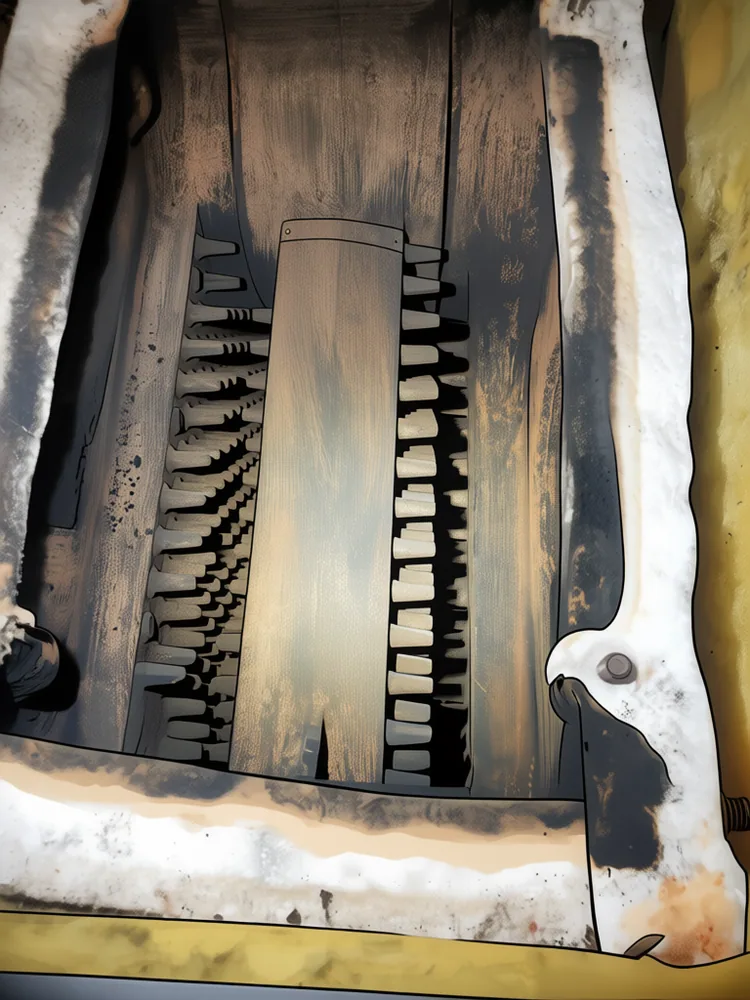
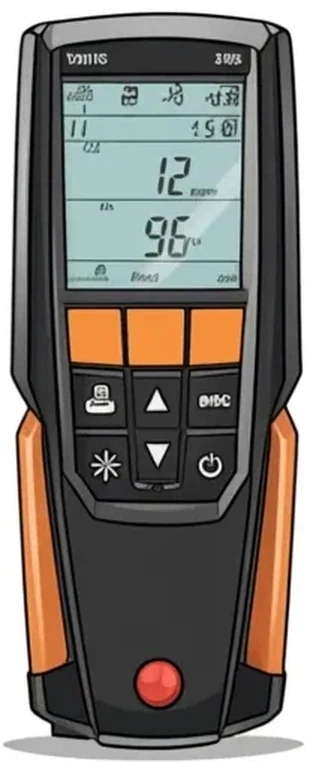
Everything else on the list is preparation for the part that cannot be eyeballed: the combustion testcombustion analyzerThe instrument a technician uses to read the flue gases and tune the burner to spec. The part of a tune-up that cannot be eyeballed.. The technician puts an analyzer probe in the flue and reads the smoke number, the draftdraftThe suction the chimney pulls through the burner. Too much or too little shows up as sooting, odor, or lost efficiency., the CO2 or O2, and the stack temperature, then adjusts air and pressure until the fire is clean and efficient. Ask for those numbers in writing or a photo. Year to year they are how you know the burner is holding its tune, and a visit that leaves no numbers behind was a dusting, not a tune-up.
What it costs
A standard annual tune-up runs about $150 to $400 depending on region and what is included. The nozzle and filters are normally part of the price; parts beyond that (a worn pump, a cracked liner) are extra and should be quoted before the work. Service-plan economics are a wash for many homeowners: a plan that bundles the tune-up with priority service and parts discounts can pay off if you would buy the visit anyway, but read what it actually covers, some are mostly a pre-paid tune-up with a markup.
How to spot a 15-minute “tune-up”
Politely, the tells that you got a drive-by:
- No vacuumvacuumThe suction the pump pulls on the line. A technician measures it to find a clogging filter or an air leak. and no brushes came out, so the heat exchanger and flue were not cleaned.
- No analyzer, so no combustion numbers, so the fire was not actually set.
- The nozzle was not replaced (a real tune-up replaces it).
- Nothing left behind: no numbers, no notes, no list of what was done.
When in the year to book it
Late summer or early fall is the sweet spot: the burner gets set before the cold, and you are not competing with no-heat emergencies for a slot. A post-season spring visit is the fallback. Either way, pairing it with a delivery-scheduling check keeps the whole system honest.
What you can do yourself, and where it stops
Here is the honest split:
- Homeowner-safe: replace the warm-air return filter on a furnace (monthly to quarterly), keep the area around the unit clear, and log run hours or oil use so you can spot a unit that is working harder than last year.
- The line: the nozzle, the fuel and combustion side, the flue brushing, and the combustion test are the visit. They need the right parts, a vacuum, and an analyzer, and the combustion setting in particular is what keeps the fire from making carbon monoxide. That is the tune-up, and it is worth what it costs.
Parts behind this fault
Some links on this page are affiliate links: as an Amazon Associate this site earns from qualifying purchases, and it may earn from other retail partners, at no extra cost to you. Parts shown are general references, not specific endorsements. Match any part to your unit's make, model, and spec before buying.
- Oil absorbent padsA sheet of oil-only sorbent laid under the burner, filter, and pump. Check price on Amazon
- Oil burner nozzleAtomizes the oil into a fine spray for combustion. Check price on Amazon
- Ignition electrodesThe pair of ceramic-insulated rods that arc a high-voltage spark to light the oil spray. Check price on Amazon
- Oil filter and cartridgeCatches sludge and water before they reach the pump and nozzle. Check price on Amazon
The other 9 parts a technician reaches for on this fault, with what each does and when it gets replaced: all oil burner parts by symptom.
Sources
- R.W. Beckett annual maintenance guidance
- NORA (National Oilheat Research Alliance) service standards material
- NFPA 31: Standard for the Installation of Oil-Burning Equipment