Oil tank replacement cost: price and when a tank is done
Updated 18 Oct 2026
Quick answer
Replacing a standard 275-gallon indoor oil tank typically costs about $4,000 to $7,000 installed in 2026, tank, fittings, new fill and vent piping where required, old-tank removal, and disposal. Outdoor, underground, or tight-access tanks cost more. A weeping seam, wet-bottom rust, or an oil smell near the tank means plan the replacement now, not after it lets go.
On this page 7 sections
What a replacement actually includes
A fair quote for a standard indoor 275-gallon swap is more than a tank on legs. It covers:
- The tank itself (steel, or a double-wall poly/steel like a Roth).
- Legs or a pad, leveled.
- Fill and vent piping brought to code where required, run in steel (black iron) pipe (not PVC or copper), with a new gauge, vent whistle, and a fire valve.
- The oil line and filter to the burner.
- Pumping out and transferring usable oil from the old tank.
- Old-tank removal and disposal, including the sludge.
- The permit and inspection where your town requires it.
A quote that is suspiciously low is usually missing the disposal, the piping, or the permit.
The price drivers, ranked
- Location. A basement tank with room to work is the cheap case. Outdoor tanks add a pad and weatherized lines; crawl spaces and tight mechanical rooms add labor.
- Access. A walk-out bulkhead is easy; carrying a tank up a narrow stairway is not, and a tank too big to remove whole has to be cut up.
- Tank type. Single-wall steel is cheapest; a double-wall tank (Roth-style, or a fiberglass tank) costs more but resists the inside-out rust that kills steel tanks and may lower your insurance friction.
- Code requirements. Some jurisdictions now require double-wall or a containment pan, and updated fill/vent piping.
- Oil left in the old tank that has to be transferred or disposed of.
- Region and season.
Typical bands in 2026: a straightforward indoor 275 swap, $4,000 to $7,000; an outdoor or double-wall job more like $6,000 to $10,000; underground is a different category entirely (below).
When a tank is done: read the warning signs
Most steel tanks fail from the inside out: water condenses on the top inside surface, runs down, and pools under the oil, rusting the bottom seam where you cannot see it. By the time it shows outside, it is late. Look for:
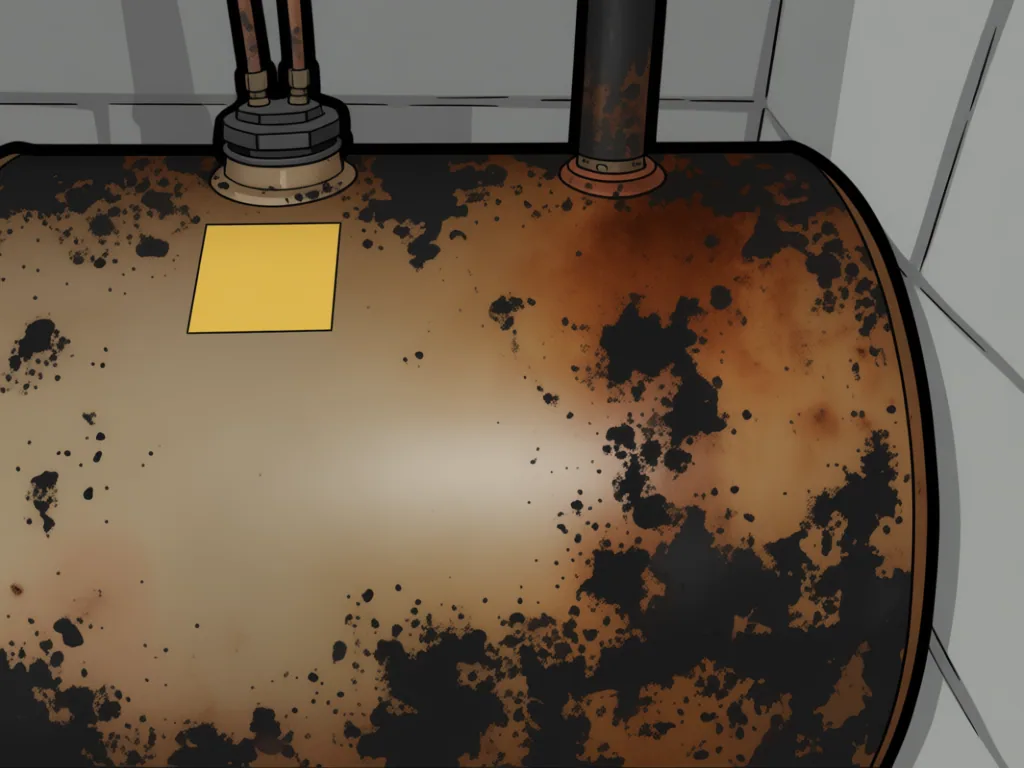
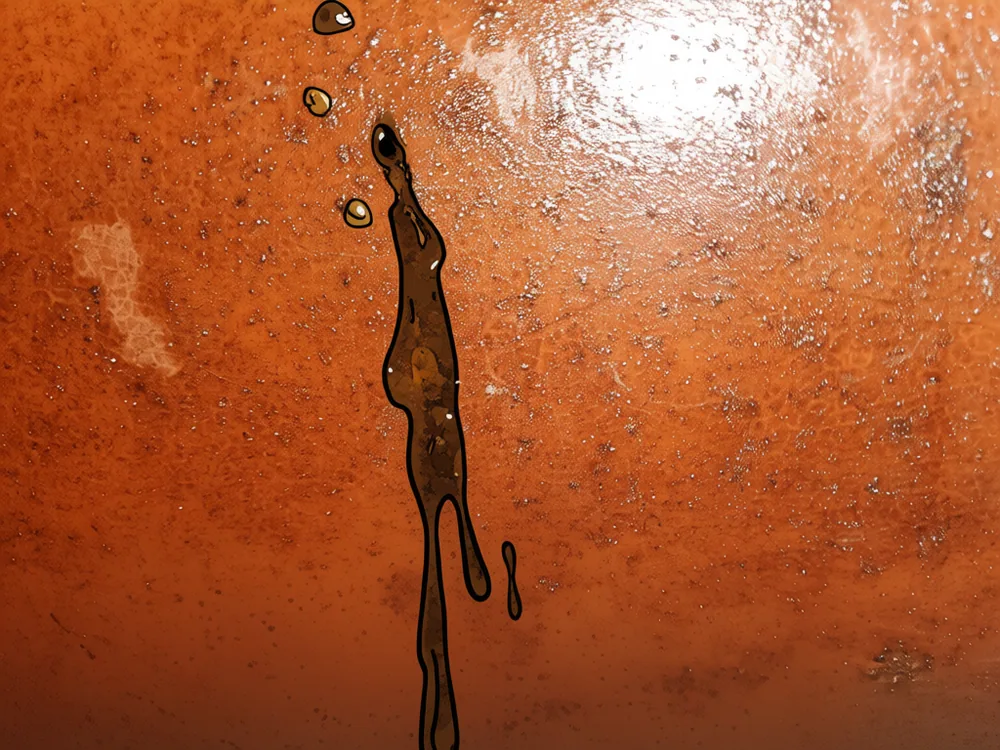
- Weeping or staining at the bottom seam, or tear-drop rust marks (pinholes starting).
- Blistered or bubbled paint in a line, often low on the tank.
- A sludge or oil smell near the tank that does not fade.
- Legs rusting at the floor, or the tank sitting in a damp spot.
- Age. Steel tanks past about 20 to 25 years are on borrowed time; a technician can ultrasonic-test the wall thickness if you want a number.
An indoor tank failure is not a heating problem, it is a five-figure environmental cleanup. The replacement is the cheap option, and catching it on the warning signs is the whole game.
Underground tanks: a different conversation
A buried tank is its own project and starts with a specialist, not a heating tech. The choices are removal or abandonment in place (filling the cleaned tank), both governed by state rules, and some states run grant or insurance programs for cleanup. Do not let a general contractor improvise this, and do not disturb a suspected leak yourself. Gate this one hard: call a licensed tank-removal company and your state’s program first.
Replacement day: what to expect
- A standard indoor swap is usually a one-day job; the heat is down only while the lines are moved over.
- The first fill happens after the install and the leak check.
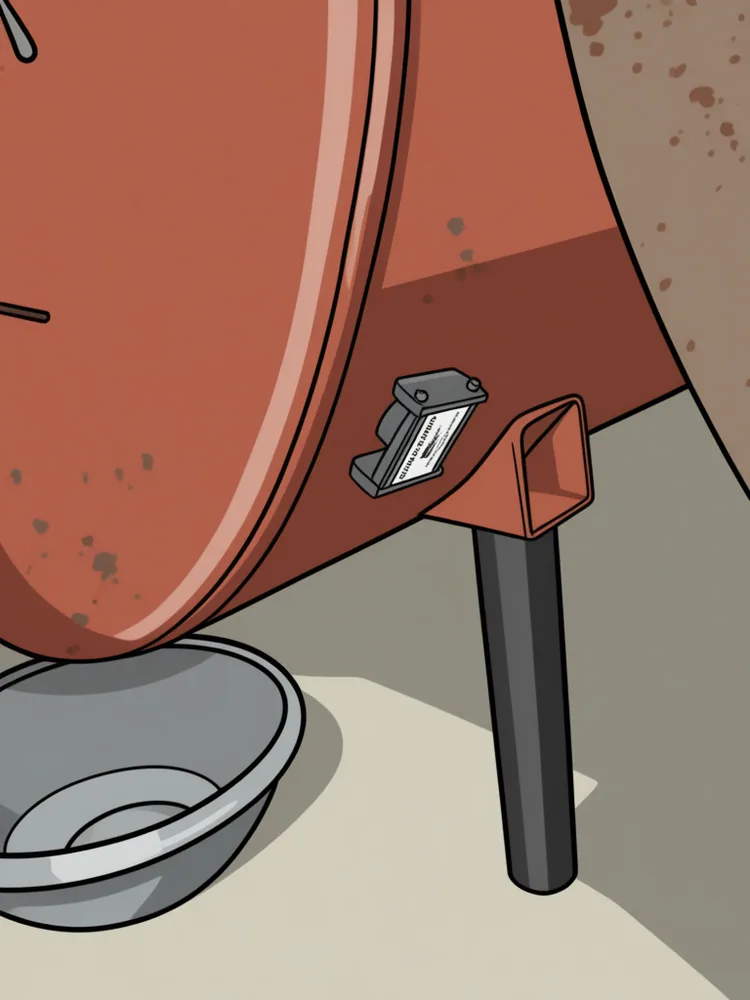
- Keep the paperwork: the permit, the new tank’s data plate, and the disposal manifest matter for insurance and for the next buyer of the house.
Can you DIY any of this?
No. Fuel-system plumbing, the fill and vent code, and the disposal are licensed work, and a botched oil line or an overfill is exactly the kind of mistake that turns into a cleanup. What you can do is prep clear access to the tank, and get two or three itemized quotes so you can compare the piping, disposal, and permit line by line rather than guessing at a single total.
Parts behind this fault
Some links on this page are affiliate links: as an Amazon Associate this site earns from qualifying purchases, and it may earn from other retail partners, at no extra cost to you. Parts shown are general references, not specific endorsements. Match any part to your unit's make, model, and spec before buying.
- Oil tank float gaugeThe dial on top of the tank that shows the oil level on a float. Check price on Amazon
- Tank vent whistleThe vent fitting that whistles while the tank fills and goes silent when it is full, so a delivery does not overfill. Check price on Amazon
- Tank fill and vent capsCaps that seal the fill and vent pipes so water and debris stay out of the tank. Check price on Amazon
What each one does and when it gets replaced: all oil burner parts by symptom.
Sources
- NFPA 31 tank installation requirements
- Manufacturer documentation (Granby, Roth) for residential oil storage tanks
- U.S. EPA guidance on residential heating oil tank releases