Oil safety valve: the Firomatic fusible-link fire shutoff
Updated 18 Oct 2026
Quick answer
An oil safety valve, often a Firomatic, is a fuel shutoff with a fusible link that melts in a fire and snaps the oil line closed, so a fire can't be fed by the fuel supply. It's a required safety device on oil systems. You replace one that sticks, leaks, or whose link has tripped, but you never bypass or wire one open.
On this page 6 sections
Some links on this page are affiliate links: as an Amazon Associate this site earns from qualifying purchases, and it may earn from other retail partners, at no extra cost to you. Parts shown are general references, not specific endorsements. Match any part to your unit's make, model, and spec before buying.
What it is
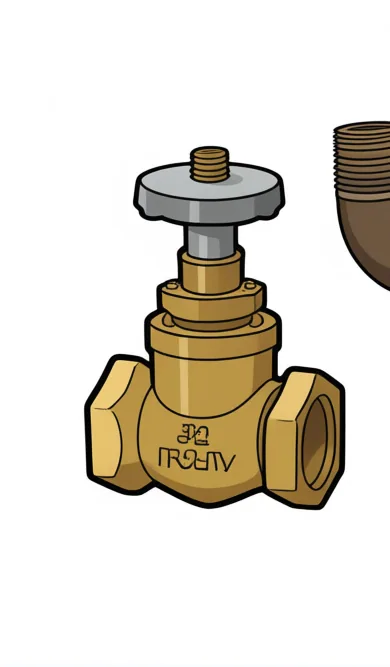
An oil safety valvefire valveA fuel shutoff with a fusible link that melts and closes the oil line automatically in a fire., usually called a fire valve and most often the Firomatic brand, is a small inline shutoff on the oil line whose only job is to close the line automatically in a fire. It does this with a fusible link, a small piece of metal alloy that melts at a set temperature. There are typically two on a system: one at the tank and one at the burner.
Why it exists
If a fire starts at the burner, the worst thing that can happen is for the oil line to keep feeding it. The fire valve removes that possibility without any electricity, control, or human action:
- It is a passive, fail-safe device. There is nothing to power, nothing to switch, and nothing a control failure can defeat.
- It is required. NFPA 31NFPA 31The national standard for installing oil-burning equipment. Most oil-heat install and safety rules trace back to it. and local code call for a fusible-link shutoff on oil systems, and fire insurers expect it. This is not an optional add-on; it is a part you keep in working order.
How it works
The mechanism is simple and entirely mechanical:
- A spring inside the valve is always trying to push the shutoff closed.
- A fusible link (a low-melting-point alloy) holds the valve open against that spring during normal operation, so oil flows to the burner as usual.
- If a fire raises the temperature at the valve past the link’s melt point, the link melts and releases, and the spring snaps the valve shut, cutting the oil.
- Once tripped, the link is spent: the valve has to be replaced, not resetresetThe button that clears a lockout for one more ignition attempt. Press it once only, never repeatedly..
That is the whole design, and its strength is that it cannot be talked out of doing its job.
Installing and replacing it
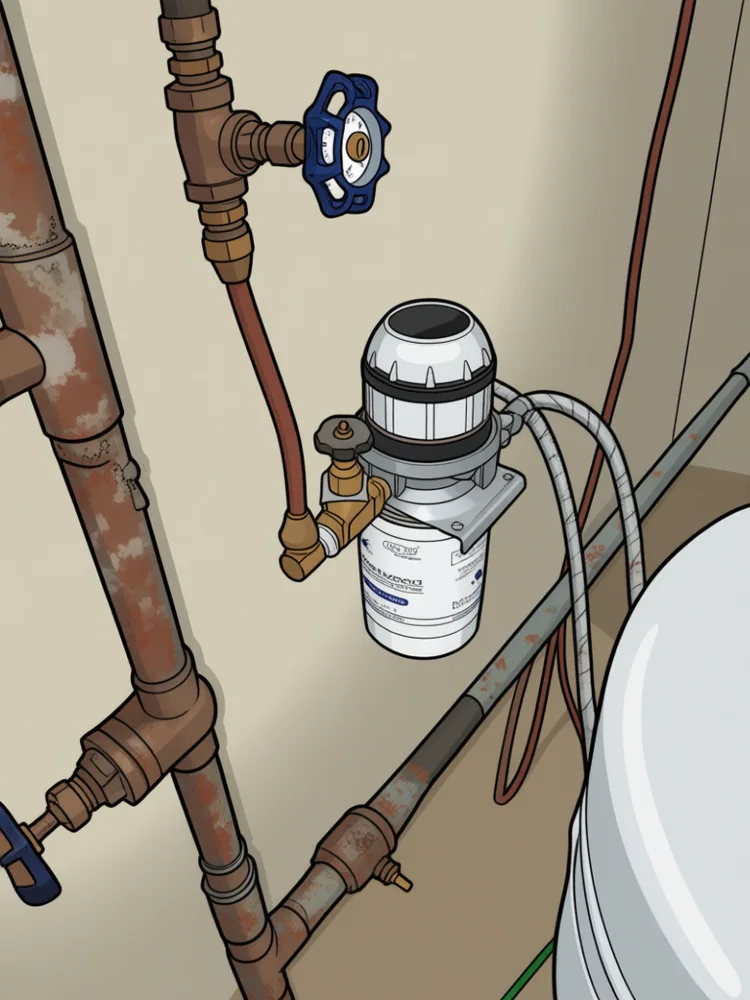
A fire valve threads into the oil line, one at the tank outlet and one at the burner, with the flow arrow pointed the right way:
- It is fuel-line work: the line is depressurized, the valve threaded in with fuel-rated sealant, and the system bled and leak-checked.
- The valve has to match the line size and the system, and the link’s rated temperature is set by the design, so you replace like with like.
The disclaimer, and the one hard line. Fitting a fire valve is pressurized fuel-line work and a technician job in most cases, governed by NFPA 31. And this is the clearest example of the line this site does not cross: explaining what the valve does is encouraged, but we will never tell anyone how to defeat one. Do not wire a tripped valve open, do not replace a fusible link with a bolt, and do not remove the valve to “fix” a flow problem, every one of those turns a fire-safety device into a fire accelerant. A valve that has tripped, sticks, or leaks gets replaced.
Troubleshooting
- Tripped (won’t pass oil, link gone): something got hot enough to melt the link, which is the valve doing its job. Find out why (a fire, or a very hot location), then replace the valve.
- Sticking or hard to open: an old valve gumming up. Replace it; do not force or lubricate it into “working.”
- Weeping at the valve: a worn seat or fitting. Replace it; a leaking fuel fitting is its own hazard.
Tools for the job
Some links on this page are affiliate links: as an Amazon Associate this site earns from qualifying purchases, and it may earn from other retail partners, at no extra cost to you. Parts shown are general references, not specific endorsements. Match any part to your unit's make, model, and spec before buying.
The fire valve is in the parts box below, matched to your line size and whether it goes at the tank or the burner (they differ). The job also wants fuel-rated thread sealant (search Amazon) and the usual flare or pipe tools. If yours is old, original, or you are not sure it still moves, replacing it is cheap insurance, but match the part and treat it as the safety device it is.
Frequently asked questions
What is a Firomatic valve?
Firomatic is the common brand of fusible-link oil safety (fire) valve. It is a shutoff on the oil line that closes automatically if a fire melts its heat-sensitive link, cutting fuel to the fire. Most oil systems have one at the tank and one at the burner.
How does a fire safety valve work?
A spring tries to close the valve, and a fusible metal link holds it open during normal use. If heat from a fire melts the link, the spring snaps the valve shut and stops the oil. Once tripped, the valve is replaced, not reset.
Can I bypass or reset a tripped fire valve?
No. A tripped valve means it did its job; replace it and find out what got that hot. Never wire it open, substitute a bolt for the link, or remove it. Defeating it turns a fire-safety device into a hazard, and it is the one thing this site will not explain how to do.
Do I need one at the tank and at the burner?
Oil systems are typically fitted with a fusible-link shutoff at the tank outlet and another at the burner, per NFPA 31 and local code. If one is missing or stuck, have it added or replaced.
What to buy
Some links on this page are affiliate links: as an Amazon Associate this site earns from qualifying purchases, and it may earn from other retail partners, at no extra cost to you. Parts shown are general references, not specific endorsements. Match any part to your unit's make, model, and spec before buying.
Fusible oil safety valve
A fuel shutoff with a fusible link that closes the oil line automatically in a fire.
Replace it when: It sticks, leaks, or its fusible link has tripped.
Often replaced at the same visit: oil filter, nozzle, pump strainer (in the tune-up kit)
Fusible oil safety valve: how it works and what to buy →
Sources
- Firomatic fusible-link valve documentation
- Oil-heat industry guidance on fire and safety valves
- NFPA 31: Standard for the Installation of Oil-Burning Equipment