Flare fittings on oil lines: why not compression
Updated 18 Oct 2026
Quick answer
Oil lines are joined with 45 degree flare fittings, not compression fittings. A flare seals metal to metal and can be opened and remade. A compression ferrule bites onto soft copper and weeps once vibration or heat moves it, which is why the service standard is to replace any compression fitting found on an oil line with a flare. Fuel line work is a technician's job.
On this page 7 sections
What it is
A flare fitting joins copper tube by shaping the end of the tube itself. The tube end is spun out into a 45 degree cone. A flare nut, slid on before the flare is made, pulls that cone tight against the matching cone on the fitting body. The seal is copper against brass, metal to metal, with nothing in between.
A compression fitting works the other way. The tube stays straight and a small brass ring, the ferrule, is crushed onto it by the nut. The ferrule does the sealing, and the ferrule is the problem on an oil line.
Why compression fittings are the wrong fitting on oil
An oil line lives next to a burner. It vibrates every time the motor runs, warms and cools with every cycle, and carries a thin fuel that finds any gap. A ferrule crushed onto soft copper holds well enough on a water line. On an oil line it weeps: the tube shrinks and grows under the ring, the ring can slide on the soft copper, and once a ferrule has moved it never seals again. Tightening the nut harder only crushes the tube.
A flare has none of that. The seat is the tube itself, so there is nothing to slip. It can be taken apart to change a filter or a pump and put back together on the same flare, and a flare that is damaged is cut off and remade in a minute.
That is why the service standard is plain: copper oil lines are connected with flare fittings, compression fittings are not used, and any compression fitting found on a line is replaced with a flare. The one exception is the slip fitting where the line enters the top of the tank, which is not under the same conditions.
How a flare is made
- Cut the tube square with a tubing cutter, never a saw. A saw leaves burrs that end up in the nozzlenozzleThe precision tip that atomizes oil into a fine spray for burning. It is sized by flow rate, spray angle, and pattern..
- Ream the inside edge so the burr does not turn into a crack in the flare.
- Slide the flare nut onto the tube first, threads facing the end. Every technician has made a perfect flare and then found the nut still on the bench.
- Clamp the tube in the flaring bar with the right amount standing above the bar, then spin the cone down until it bottoms.
- Look at the flare. It should be smooth and even all the way round, with no cracks at the edge and no scoring on the face. A flare with a flaw is cut off and made again.
Tighten the nut firmly. A flare that still weeps is not fixed by more force. The supply is shut off, the joint opened, the flare inspected, and if it looks sound it is cleaned, reconnected and watched while the burner runs. If it weeps again, the flare is cut out and remade.
Sizes: 3/8 and 1/2 inch
Flare fittings are named by the outside diameter of the copper tube. Two sizes cover residential oil work.
- 3/8 inch is the common size at the burner and on short runs from a nearby tank.
- 1/2 inch is the recommended size for a normal residential run, and what two pipetwo pipeAn oil supply setup with a supply line and a return line back to the tank, so the pump self-purges air. Common where the tank sits below the burner. systems and longer or higher lifts use.
The nuts, unions, elbows and adapters in each size are all the same 45 degree family, so a run can step from 1/2 inch line to a 3/8 inch connection at the burner with a reducing fitting. Flare fittings for oil are brass.
The fire valve and the flex lines
Right at the burner the line carries a fusible link valve, the Firomaticfire valveA fuel shutoff with a fusible link that melts and closes the oil line automatically in a fire. type. Its handle is held open by a link that melts in a fire, so the valve closes and stops feeding oil to the flames. It has flare connections on both sides, and it is the last hard fitting before the flex lines that connect to the pump. The fire valve page covers why it is required and when it needs replacing.
The flex lines themselves come with flare ends, which is why a burner can be swung open for service without cutting a line.
What the job involves
Running or repairing a fuel line is a technician’s job. It means shutting the tank valve, draining the line, cutting and flaring, and bleedingbleedPurging air from the oil line at the pump's bleed port so the burner can draw fuel again, usually after a run-out. the pump afterwards, with the drips caught on pads and the spent oil handled properly. A homeowner’s part is to look. A dark wet spot on a fitting, a smell of oil near the burner, or a burner that locks out after sitting overnight are all reasons to call, and a compression fitting anywhere on the line is a reason to ask for it to be replaced.
What to buy
The fittings, the flaring tool and the cutter are the same items a technician carries; they are listed below with the fire valve, the flex lines and the de-aeratorde-aeratorA small device that removes air from the oil line so a single-pipe system self-bleeds instead of locking out. Tigerloop is the common brand. that make up a full line kit.
Frequently asked questions
Can a compression fitting be used on a heating oil line?
No. Oil lines are joined with 45 degree flare fittings. A compression ferrule weeps under the vibration and heat cycling next to a burner, and the service standard is to replace any compression fitting found on an oil line with a flare.
What size flare fittings does an oil burner use?
3/8 inch at the burner and on short runs, 1/2 inch for a normal residential run and for two pipe systems. Both are the same 45 degree flare family, in brass.
Why is my flare fitting weeping?
Usually a flawed flare: a crack at the edge, scoring on the face, or a burr from a saw cut. More force does not fix it. The joint is opened and inspected, and a flawed flare is cut off and remade.
Is this a homeowner job?
No. Fuel line work means draining the line, flaring copper and bleeding the pump. A homeowner looks for wet fittings or an oil smell and calls.
What to buy
Some links on this page are affiliate links: as an Amazon Associate this site earns from qualifying purchases, and it may earn from other retail partners, at no extra cost to you. Parts shown are general references, not specific endorsements. Match any part to your unit's make, model, and spec before buying.
3/8 inch flare fittings
Brass 45 degree flare nuts, unions, elbows and adapters for 3/8 inch outside diameter copper.
Why it earns its place: 3/8 is the common size at the burner and on short runs.
1/2 inch flare fittings
The same 45 degree family for 1/2 inch outside diameter copper.
Why it earns its place: Longer runs and two pipe systems use 1/2 inch line.
Flaring tool, 45 degree
Clamps the tube in a bar and spins a cone into the end to form the 45 degree flare that a flare nut seals on.
Why it earns its place: Oil lines are flare, not compression. This is the tool that makes the joint.
Tubing cutters, 3/4 inch and mini
A wheel cutter for copper oil line. The mini fits where the full size cannot turn.
Why it earns its place: A hacksaw leaves burrs that end up in the nozzle. A square cut is the start of a good flare.
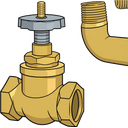
Fusible oil safety valve
A fuel shutoff with a fusible link that closes the oil line automatically in a fire.
Replace it when: It sticks, leaks, or its fusible link has tripped.
Often replaced at the same visit: oil filter, nozzle, pump strainer (in the tune-up kit)
Fusible oil safety valve: how it works and what to buy →
Flexible oil lines
The flexible flare-ended lines that connect the burner (or a de-aerator) to the rigid oil line, so the burner can be swung open for service without unmaking fittings.
Replace it when: Cracked, stiff, kinked or weeping, and whenever the burner is repiped for a de-aerator.
Often replaced at the same visit: de-aerator
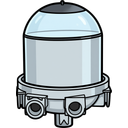
Fuel oil de-aerator
Purges air from the oil line so a one-pipe system self-bleeds after a run-out instead of locking out on air.
Replace it when: Repeated air-in-line lockouts, especially after the tank has run dry.
Often replaced at the same visit: flex oil lines
Fuel oil de-aerator: how it works and what to buy →
Sources
- NORA Oil Heat Technicians Manual, fuel line and tune-up chapters (copper lines connected with flare fittings; compression fittings must not be used; slip fittings at the tank top are the exception; replace any compression fitting found with a flare)
- Firomatic fusible-link valve literature, as covered on the fire valve page