Furnace fires then shuts off: oil burner flame failure
Updated 18 Oct 2026
Quick answer
Your burner fires, runs a few seconds to a minute, then shuts off: the control is not seeing stable flame and shuts down on safety. You can check the obvious: a very low tank, an overdue filter, a blocked air intake, one reset only. The real causes, a worn nozzle, weak spark, bad draft, air in the fuel line, or a sooted cad cell, are technician territory. Never keep resetting.
On this page 7 sections
What “fires then dies” actually is
The burner lighting and then quitting is not a random failure. It is the safety system doing its job. Every oil burner has to prove it has a flame, and the part that proves it is the cad cellcad cellThe light sensor that proves a flame is burning. If it cannot see flame fast enough, the primary control locks the burner out., a small light sensor aimed at the fire. When the burner starts, the primary controlprimary controlThe small box on the burner that runs the ignition sequence, watches the cad cell, and latches into lockout on a failed start. gives it a short trial window to see a steady flame. If the control does not get a clean signal, it shuts the burner down rather than keep pumping oil into a fire it cannot confirm.
So a burner that lights and dies is telling you the flame started but was not proven, or was lost. That is the system working. The job is to find why the flame is not holding or not being seen.
The timing is a clue
Roughly how long it runs before it quits points at different families of cause:
- A few seconds, then out, repeatedly: the control is not proving flame. Think cad cell (dirty or out of position), a poor spray patternspray patternHow a nozzle spreads oil in the cone: hollow (A), solid (B), or semi-solid (W). The burner's spec calls for a specific one., or weak ignition.
- Ten to forty-five seconds, then locks out: it ran the trial window and gave up. Same flame-proving family, often fuel delivery or nozzlenozzleThe precision tip that atomizes oil into a fine spray for burning. It is sized by flow rate, spray angle, and pattern..
- Several minutes of good fire, then off, and the room is warm-ish: that may be a limit control doing its normal job, not a fault at all, especially on a boiler.
This is a clue, not a diagnosis. The fix still needs instruments.
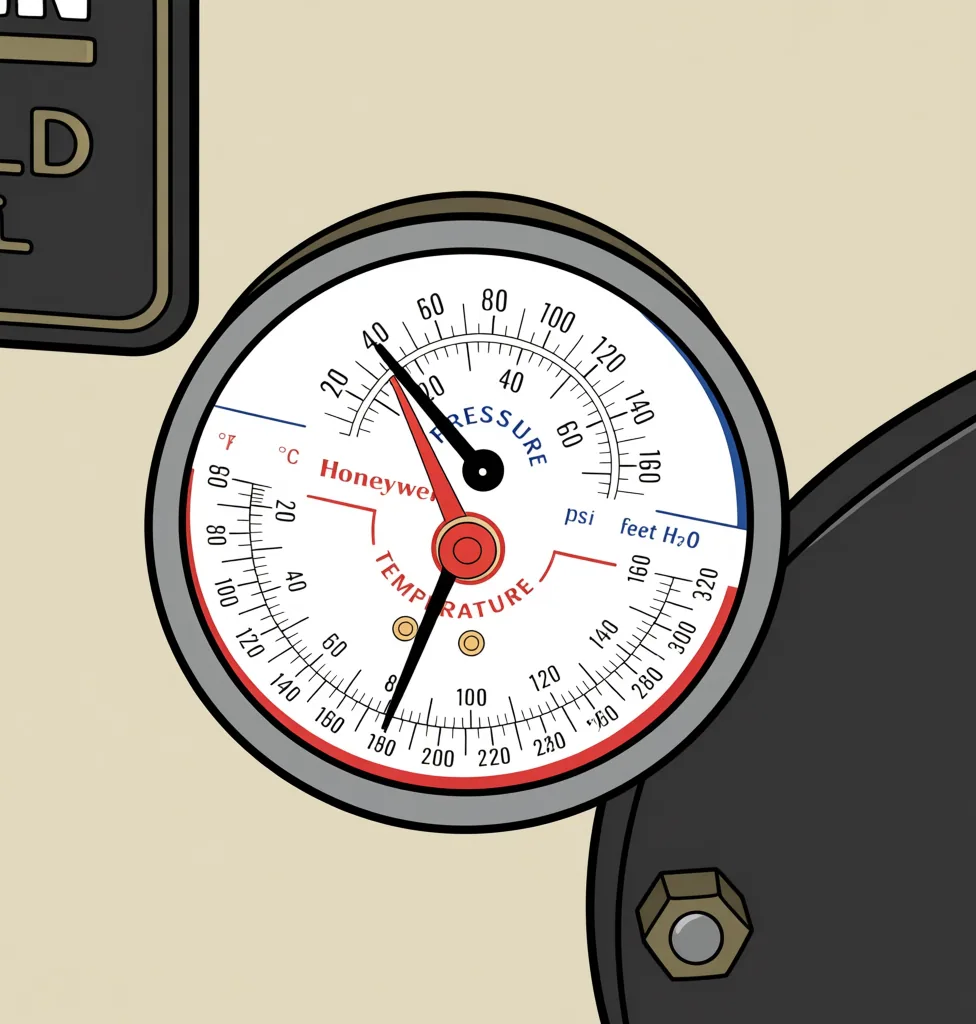
What you can safely check
Nothing here needs tools or opening the fuel system:
- Tank level. Stick the tank and convert with the tank chart. A low tank starves the flame and pulls sludge.
- Recent filter change. If the filter is years overdue, that fits a starving flame; note it for the technician.
- Combustion-air intake. If the unit is in a closet or a tight mechanical room, make sure nothing is blocking the air supply or louvers.
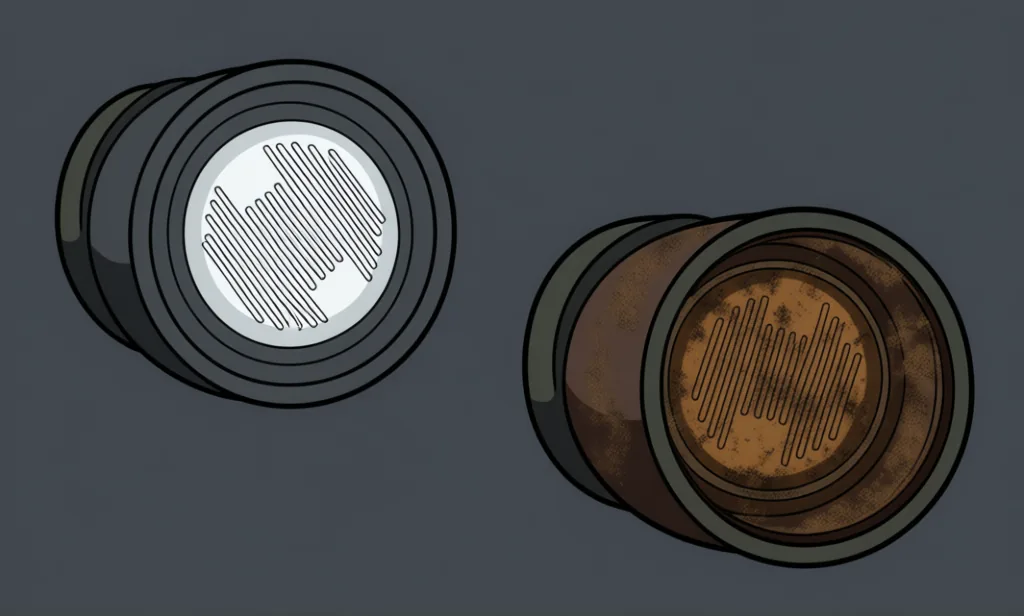
- The cad cell, but hands off. A sooted cad cell (the flame sensor aimed at the fire) is a classic cause of exactly this symptom, and it is tempting to pull and wipe it. Do not: on most burners it sits behind the igniterigniterThe modern solid-state replacement for the ignition transformer, doing the same job of firing the spark., so reaching it means swinging back a live high-voltage component. Note the symptom for the technician, who checks the cell, its resistance, and its aim.
- One resetresetThe button that clears a lockout for one more ignition attempt. Press it once only, never repeatedly. press, watching the full cycle. One only. See below.
Why repeated resets get dangerous
Each failed start sprays atomized oil into a hot chamber. Light it on the first retry and it burns off. Stack five or six retries and you can have a puddle of unburned oil waiting for the next spark, and when it finally catches it lights all at once. That is a puffbackpuffbackA sudden ignition of oil that pooled after failed starts. It can blow the flue apart and coat a house in oily soot, which is why you never stack resets.: a low-grade explosion that can blow the flue apart and push oily soot through the whole house. Press reset once. If it does not hold, stop and call. The reset button guide covers the rule in full.
How the rest gets diagnosed
Described so you know the work, and so you can tell a thorough visit from a guess:
- The cad cell: a technician reads its resistance in light and dark with a meter (a healthy cell drops to a few hundred ohms seeing flame, and reads very high in the dark), then confirms its aim.
- The nozzle: condition and spray pattern, and whether it matches the burner spec. A worn nozzle makes a ragged flame the cad cell is right to reject.
- Ignition: electrodeelectrodesThe pair of ceramic-insulated rods that arc a high-voltage spark to light the oil spray. gap and condition, and igniter or transformer output.
- Fuel: pump pressure, air in the suction linesuction lineThe oil line the pump draws fuel through from the tank. An air leak here causes hard starts and lockouts., and lift on an outside or below-burner tank.
- DraftdraftThe suction the chimney pulls through the burner. Too much or too little shows up as sooting, odor, or lost efficiency., then a combustion testcombustion analyzerThe instrument a technician uses to read the flue gases and tune the burner to spec. The part of a tune-up that cannot be eyeballed. to set it all back to spec.
The parts behind this fault page shows what each of these is and the rough cost.
What the repair usually costs
- Service call or diagnostic: about $100 to $250, often credited to the repair.
- Cad cell, nozzle, or electrodes: the parts are cheap (tens of dollars); with labor a typical fix is around $150 to $400.
- Many of these are tune-up items, so if a tune-up is overdue, this is often the bill catching up with deferred maintenance.
Parts behind this fault
Some links on this page are affiliate links: as an Amazon Associate this site earns from qualifying purchases, and it may earn from other retail partners, at no extra cost to you. Parts shown are general references, not specific endorsements. Match any part to your unit's make, model, and spec before buying.
- Oil burner nozzleAtomizes the oil into a fine spray for combustion. Check price on Amazon
- Cad cell flame sensorThe light-sensing eye that proves a flame is present. Check price on Amazon
- Burner primary controlThe brain on the burner: it runs the ignition sequence, watches the cad cell, and latches into lockout on a failed start. Check price on Amazon
- Burner motorSpins the fuel pump and the combustion-air fan on the burner. Check price on Amazon
One more part a technician reaches for on this fault, with what it does and when it gets replaced: all oil burner parts by symptom.
Sources
- Honeywell/Resideo R7184 cad-cell primary control documentation
- R.W. Beckett nozzle and combustion-air guidance
- NFPA 31: Standard for the Installation of Oil-Burning Equipment