Oil furnace not turning on? Work this list before you call
Updated 18 Oct 2026
Quick answer
An oil furnace that is not turning on usually traces to five things you can check in five minutes: thermostat setting and batteries, the emergency switch and the service switch, a tripped breaker, an empty tank, or a lockout that allows ONE reset press. Anything past that list is technician work.
On this page 8 sections
Is it the furnace, or something upstream?
Before you touch the burner, rule out the cheap stuff. A large share of no-heat calls are a thermostat or a switch, not the unit.
- Thermostat. Set it to Heat and push the target five degrees above room temperature. If it runs on batteries, change them; a dying battery is one of the most common winter no-heat causes. If you recently put in a smart thermostat, an oil system without a common (C) wire can leave it underpowered, which shows up as no call for heat or intermittent ones. (Our smart thermostat guide covers the C-wire issue.)
- One room cold, the rest fine? On a boiler that points at a zone valve or a circulator, not the burner. The burner is probably running fine, and the checks below will not help. That is a different repair.
The switch nobody believes is off
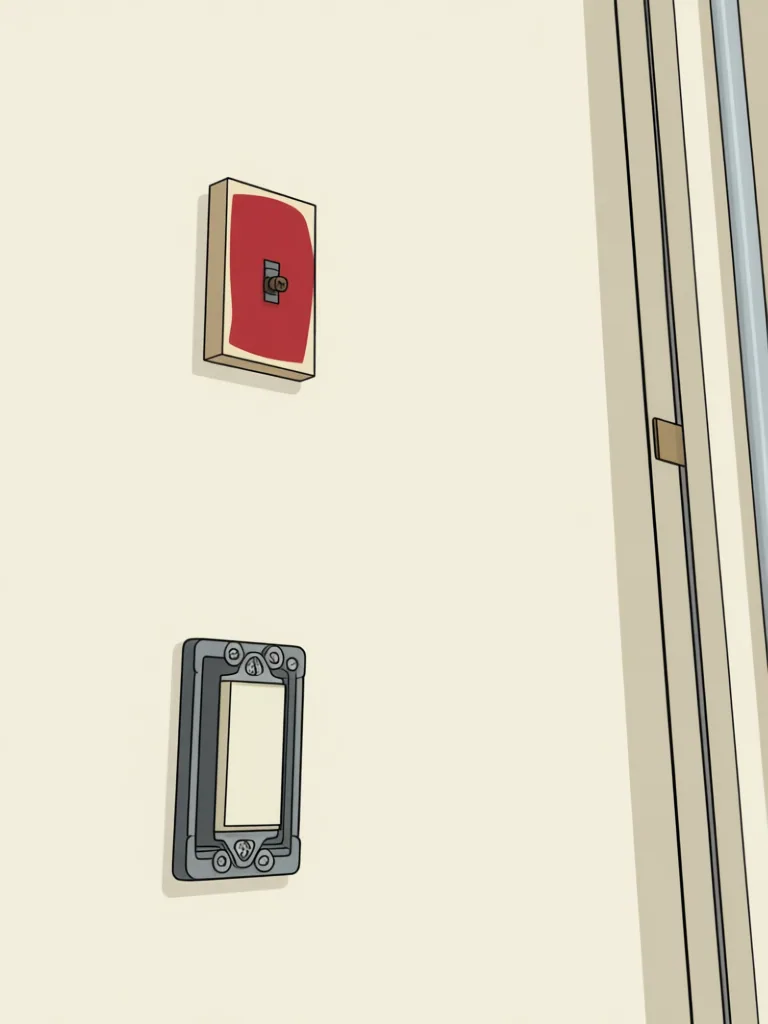
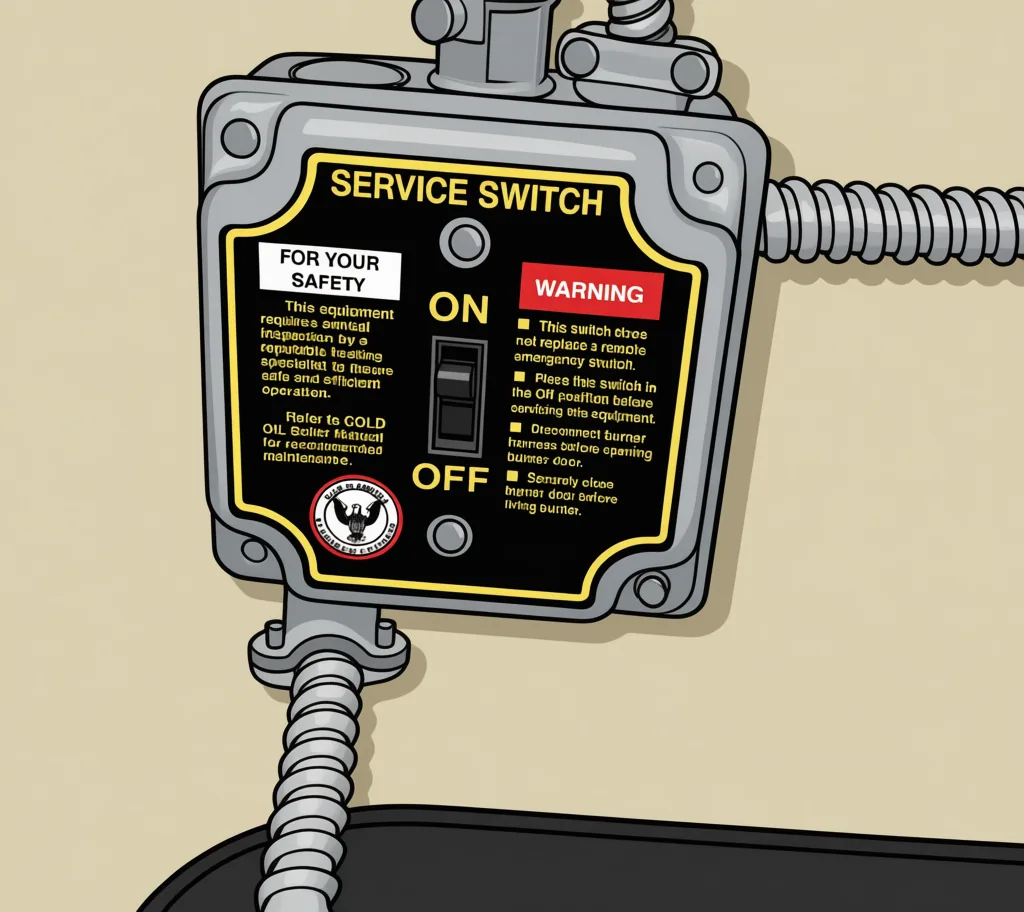
Oil systems have a burner service switch right at the unit, and many homes also have a second emergency shutoff at the top of the basement stairs that looks exactly like a light switch. Guests flip it. Cleaners flip it. Kids flip it.
Check both. They are usually red, usually a plain toggle, and one of them off kills the burner completely with no other symptom. This is a ten second check that ends a meaningful number of service calls.
Power: the breaker and the fuse
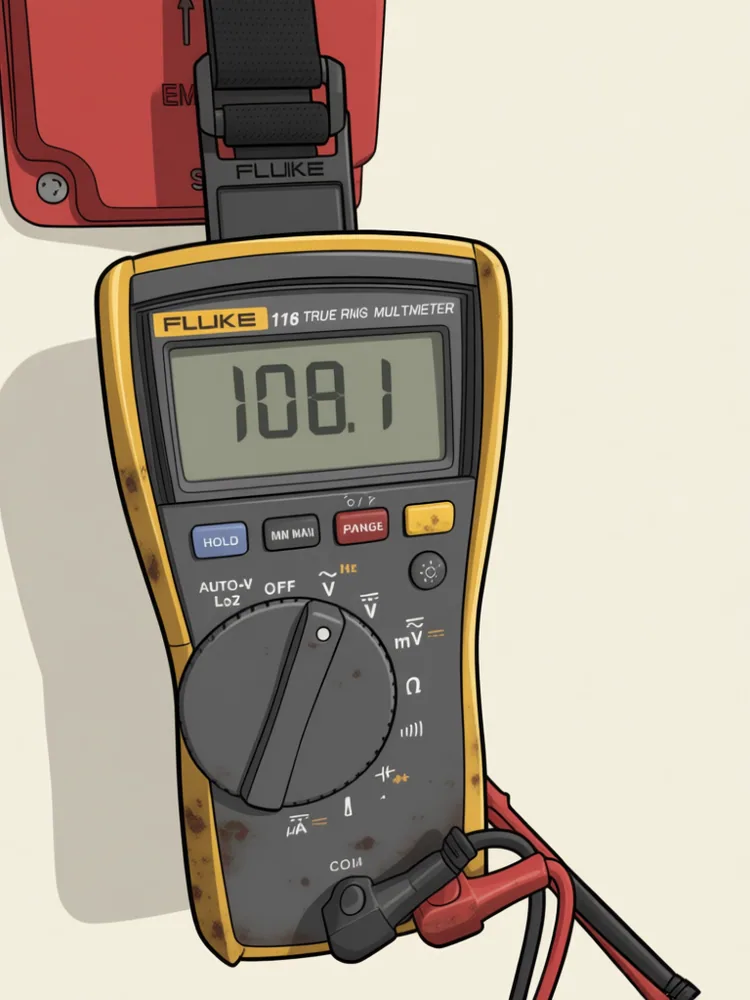
Look at the electrical panel for the burner circuit and confirm the breaker has not tripped (a tripped breaker often sits slightly off center rather than fully off). ResetresetThe button that clears a lockout for one more ignition attempt. Press it once only, never repeatedly. it once. If it trips again right away, stop. A breaker that will not hold is reporting a fault downstream, and that is a service call, not another reset. Do not start metering or opening the burner junction box; there is line voltage in there, and that is the one part of this list that is genuinely dangerous to poke at.
Is there actually oil?
Do not trust the float gauge on top of the tank. They stick, and a gauge reading a quarter tank while the tank is dry is a classic. Check the level for real: drop a clean stick to the bottom, read the wet line, and convert it with the tank chart.
If you are below roughly an eighth of a tank, order oil before you diagnose anything else. A near-empty tank both starves the burner and pulls sludge off the bottom toward the pickup, and a run-out mimics a dozen other failures. See ran out of heating oil for the restart.
Locked out? Press reset once, and only once
If the burner’s primary controlprimary controlThe small box on the burner that runs the ignition sequence, watches the cad cell, and latches into lockout on a failed start. has a lit reset button, it locked out after a failed start. You may press it one time, then watch the burner through a full cycle. If it lights and runs clean, you were probably looking at a transient.
If it locks out again, stop. Do not keep pressing. Every failed start sprays more unburned oil into the chamber, and stacking retries sets up a puffbackpuffbackA sudden ignition of oil that pooled after failed starts. It can blow the flue apart and coat a house in oily soot, which is why you never stack resets.. The second lockoutlockoutThe safety state the primary control latches into after a failed start. It stops the burner until someone presses reset. is a service call, and the reset button guide explains exactly why.
What you can still check, and where it gets handed off
Past the list above you are into the fuel and ignition system. Some of it is genuinely homeowner-accessible, and since the information is everywhere, here is the honest map of who does what:
- The oil filter. A clogged filter starves the burner, and changing the cartridge is a job many handy owners do (close the tank valve, swap the cartridge, open the valve, then the line is bled). The catch is the bleedbleedPurging air from the oil line at the pump's bleed port so the burner can draw fuel again, usually after a run-out. and the small fuel spill, so most people fold it into a tune-up. See the fuel filter upgrade.
- The cad cellcad cellThe light sensor that proves a flame is burning. If it cannot see flame fast enough, the primary control locks the burner out.. A sooted flame sensor is a known no-prove cause, but on most burners it sits behind the igniterigniterThe modern solid-state replacement for the ignition transformer, doing the same job of firing the spark., so reaching it means swinging back a live high-voltage component. That puts it on the technician’s side, not yours; mention the symptom when you call.
- Everything that needs a gauge or a meter is the tech’s. Pump pressure and vacuumvacuumThe suction the pump pulls on the line. A technician measures it to find a clogging filter or an air leak., electrodeelectrodesThe pair of ceramic-insulated rods that arc a high-voltage spark to light the oil spray. gap, igniter or transformer output, the primary control, and on a boiler the aquastataquastatOn a boiler, the control that reads water temperature to set the high limit and run the circulator. and low-water cutofflow-water cutoffA boiler safety that stops the burner if the water level drops too low. A safety device, never to be defeated. are all diagnosed with instruments, then finished with a combustion testcombustion analyzerThe instrument a technician uses to read the flue gases and tune the burner to spec. The part of a tune-up that cannot be eyeballed. to set the burner back to spec. That last step is the part that cannot be eyeballed, and it is why a “got it running” fix without numbers tends to come back as a soot problem in February.
The parts behind these faults page shows what each one is.
What the common fixes run
Ballparks for 2026, varying by region and after-hours timing:
- Diagnostic or service call: roughly $100 to $250 to get a technician in front of the unit, often credited toward the repair.
- The frequent culprits are cheap parts. A nozzlenozzleThe precision tip that atomizes oil into a fine spray for burning. It is sized by flow rate, spray angle, and pattern., an oil filter, or a cad cell is each in the tens of dollars; with labor a typical no-start fix lands around $150 to $400.
- Pump or igniter or transformer: more like $200 to $450 installed.
- If it ran dry: bleeding the line and changing the filter is quick work, and many dealers fold it into the delivery, ask when you order.
Most of these are exactly what an annual tune-up is meant to catch before the cold snap that finds them.
Parts behind this fault
Some links on this page are affiliate links: as an Amazon Associate this site earns from qualifying purchases, and it may earn from other retail partners, at no extra cost to you. Parts shown are general references, not specific endorsements. Match any part to your unit's make, model, and spec before buying.
- Oil absorbent padsA sheet of oil-only sorbent laid under the burner, filter, and pump. Check price on Amazon
- Oil filter and cartridgeCatches sludge and water before they reach the pump and nozzle. Check price on Amazon
- Oil fuel pumpPulls oil from the tank and pressurizes it to the nozzle. Check price on Amazon
- Fuel oil de-aeratorPurges air from the oil line so a one-pipe system self-bleeds after a run-out instead of locking out on air. Check price on Amazon
The other 6 parts a technician reaches for on this fault, with what each does and when it gets replaced: all oil burner parts by symptom.
Sources
- Honeywell/Resideo thermostat and aquastat documentation
- R.W. Beckett GeniSys 7505 primary control manual
- NFPA 31: Standard for the Installation of Oil-Burning Equipment