Oil furnace blowing cold air: why, and what to check
Updated 18 Oct 2026
Quick answer
An oil furnace blowing cold air almost always means the blower is running but the burner is not making heat. Check the thermostat fan setting (AUTO, not ON), the air filter, and whether the burner is actually firing or sitting in lockout (press reset ONCE). If the burner won't stay lit, that's the real fault and the troubleshooting points there.
On this page 6 sections
What cold air is really telling you
This one is for warm-air furnaces, the kind that blow heated air through ducts. (A boiler does not blow air; if you have radiators or baseboard, your “cold” problem is a different one.)
A furnace makes heat in two stages: the burner lights and heats the heat exchangerheat exchangerThe metal chamber that passes combustion heat into your home's air or water while keeping the fumes separate. A crack in it is a carbon monoxide hazard., and then the blower sends air across that hot exchanger into the house. Cold air at the registers means stage two is running without stage one: the blower is moving air, but the burner is not putting heat into the exchanger. So the real question is why the burner is not firing, or not staying lit.
Check these, in order
- The thermostat fan setting. This is the most common and the simplest. If the fan is set to ON, the blower runs all the time, including between burner cycles, so it blows room-temperature air whenever the burner is off. Set it to AUTO and the fan only runs when there is heat to deliver.
- Is the burner actually firing? Go to the unit and listen. If the burner is silent while the blower runs, the burner is your problem, not the fan. If the reset buttonresetThe button that clears a lockout for one more ignition attempt. Press it once only, never repeatedly. is lit, it locked out; press it once and watch (the reset button rule still applies, never stack presses).
- The air filter. A clogged return filter chokes airflow, which can make the furnace overheat and trip its high limithigh limitThe safety setting that shuts the burner off if the water or air gets too hot. It is a safety device, never to be bypassed.: the burner shuts off on safety while the blower keeps running to cool things down, so you feel cool air. Replace a loaded filter and see if it settles.
- The emergency switch, the service switch and the breaker, the same as any no-heat call, in case the burner lost power but the blower did not.
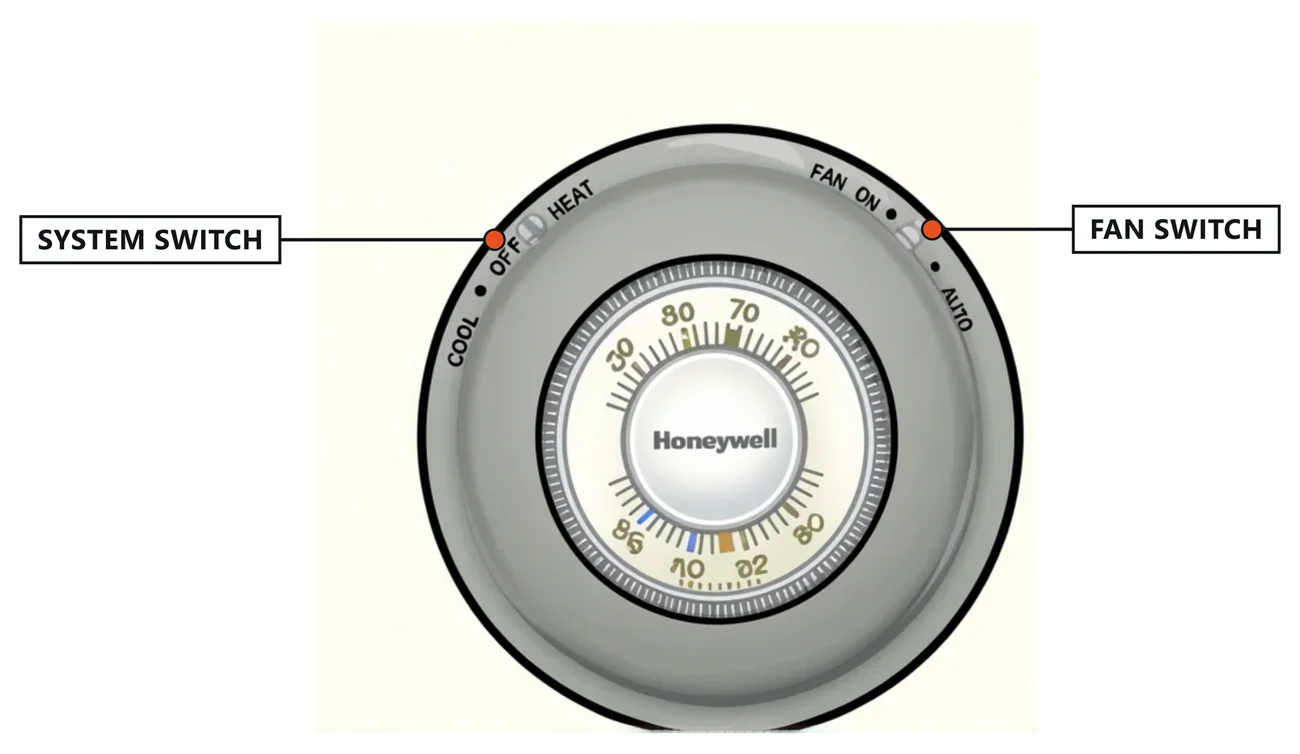
The two patterns, and which is which
- Constant cool air, burner runs fine when it cycles: almost always the fan set to ON. Harmless, and an AUTO fix.
- Cool air because the burner keeps quitting or never lights: that is a real burner fault, and the cold air is just the symptom you noticed first. Work it as a no-heat problem.
When it is the burner (where this hands off)
If the burner is not firing or will not stay lit, you are into the fuel and flame-proving chain, which is instrument work past the homeowner checks above:
- Won’t start at all: oil furnace not turning on.
- Fires, then dies: furnace fires then shuts off.
- Overheating and short-cycling on the limit points at airflow (filter, ducts, blower) or a failing limit control, both a service call once the filter is ruled out.
The parts behind these faults page shows what a technician ends up replacing.
A note on lukewarm, not cold
If the air is warm but not hot, that is usually a different story: a dirty heat exchanger, a burner that has drifted out of tune, or an oversized blower. That is a tune-up conversation, where a combustion test sets the fire back to spec, rather than a no-heat one.
Parts behind this fault
Some links on this page are affiliate links: as an Amazon Associate this site earns from qualifying purchases, and it may earn from other retail partners, at no extra cost to you. Parts shown are general references, not specific endorsements. Match any part to your unit's make, model, and spec before buying.
- Oil absorbent padsA sheet of oil-only sorbent laid under the burner, filter, and pump. Check price on Amazon
- Oil filter and cartridgeCatches sludge and water before they reach the pump and nozzle. Check price on Amazon
- Oil fuel pumpPulls oil from the tank and pressurizes it to the nozzle. Check price on Amazon
- Fuel oil de-aeratorPurges air from the oil line so a one-pipe system self-bleeds after a run-out instead of locking out on air. Check price on Amazon
The other 7 parts a technician reaches for on this fault, with what each does and when it gets replaced: all oil burner parts by symptom.
Sources
- Honeywell/Resideo thermostat and fan-control documentation
- R.W. Beckett burner sequence-of-operation literature
- NFPA 31: Standard for the Installation of Oil-Burning Equipment