Oil furnace reset button: when to press it (just once)
Updated 18 Oct 2026
Quick answer
Press the reset button ONCE. If the burner starts and stays running, watch it through a full cycle. If it locks out again, stop. Repeated resets flood the combustion chamber with unburned oil and set up a dangerous puffback. That second lockout is a service call.
On this page 8 sections
- What a burner lockout is, and what the reset button does
- The one-press rule (and why techs are strict about it)
- Before you press it: a 60-second pre-check
- Pressing it correctly
- Reset button not working, or it locked out again: what that means
- What this repair typically costs
- Prevention: why tune-ups make lockouts rare
- Parts behind this fault
What a burner lockout is, and what the reset button does
The red button sits on your burner’s primary controlprimary controlThe small box on the burner that runs the ignition sequence, watches the cad cell, and latches into lockout on a failed start., the small box, usually gray or black, mounted on the burner itself or just above it. The primary control’s whole job is to prove a flame exists. When the burner tries to start and the control never “sees” flame within its trial window (typically 15 to 45 seconds, depending on the model), it shuts the burner down and latches into lockoutlockoutThe safety state the primary control latches into after a failed start. It stops the burner until someone presses reset.. On most modern controls a red light tells you so. On a warm-air furnace the blower can keep running while the burner sits locked out, which is why a locked-out furnace blows cold air.
Pressing the button does exactly one thing: it clears that latch and re-arms the control for one more ignition attempt. It is not a power switch, it doesn’t fix anything, and it doesn’t resetresetThe button that clears a lockout for one more ignition attempt. Press it once only, never repeatedly. any electronics in the useful sense. It just says “try once more.”
That distinction matters, because the control locked out for a reason. Sometimes the reason was trivial, a power blip mid-cycle, a slug of air in the fuel line after a delivery. One retry covers those. Anything else, and the retry will fail the same way the first attempt did.
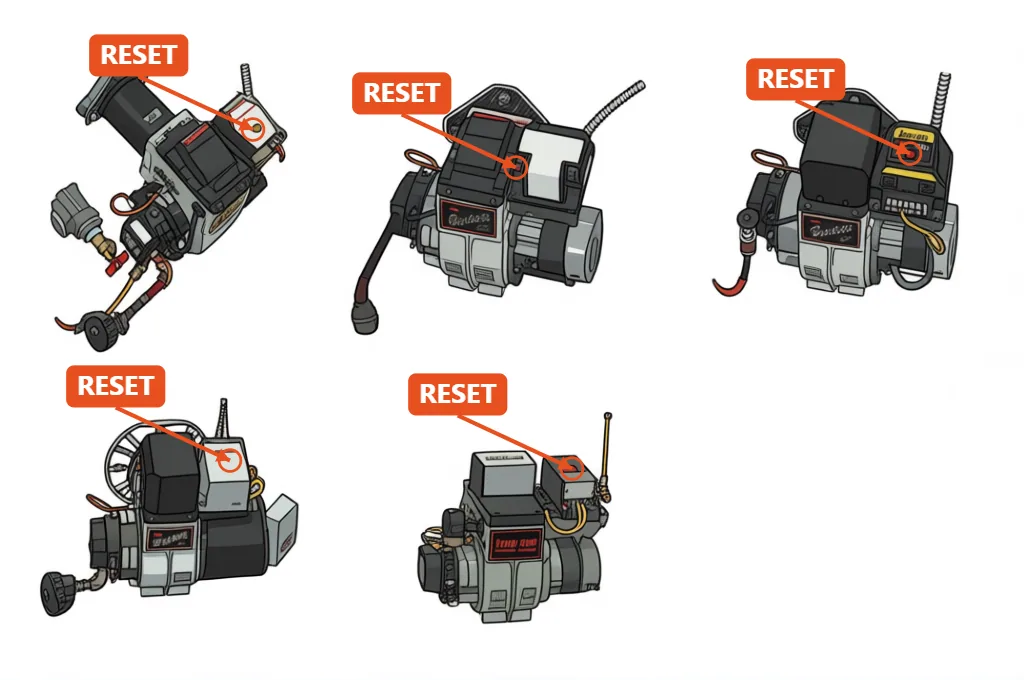
The one-press rule (and why techs are strict about it)
Every failed ignition attempt sprays oil. The pump runs, the nozzlenozzleThe precision tip that atomizes oil into a fine spray for burning. It is sized by flow rate, spray angle, and pattern. atomizesatomizeTo break oil into a fine mist so it burns cleanly. The nozzle does this under pump pressure. roughly a gallon and a half per hour into the combustion chamberfireboxThe lined chamber where the oil actually burns. Its refractory liner holds the heat and protects the walls., and if nothing lights it, that oil pools in the chamber and soaks the chamber liner.
Press reset once, and you’ve allowed one more spray. Press it five times, and there can be a small puddle of unburned fuel oil sitting in a hot firebox waiting for attempt number six to finally catch. When it does, it doesn’t light politely, it lights all at once. That’s a puffbackpuffbackA sudden ignition of oil that pooled after failed starts. It can blow the flue apart and coat a house in oily soot, which is why you never stack resets.: a low-grade explosion that can blow the flue pipe apart and push oily black soot through every room in the house. Cleanup routinely runs into five figures, and it is entirely preventable.
So the rule, the same one printed in the Beckett and Honeywell manuals and repeated by every service department on earth:
Press the reset button once. If it locks out again, stop and call.
If someone in the house already pressed it a few times before you got there, treat the button as spent, don’t add attempts on top. Tell the tech how many times it was pressed; it genuinely changes how they approach the unit.
Before you press it: a 60-second pre-check
Half of “no heat” calls aren’t burner failures at all. Run these checks first and you may not need the button, and if you do, you’ll know the attempt is a fair test.
- Smell check first. A strong oil smell, smoke, or any suspicion of carbon monoxide ends this checklist immediately, don’t press anything, shut the burner off at the service switch, and call. (CO symptoms: headache, nausea, grogginess that improves outdoors. If a CO alarm is sounding, leave first and call from outside.) Which odors mean trouble now: oil furnace smells.
- Thermostat. Heat mode, set 5°F above the room temperature. Dead batteries account for a humbling share of winter service calls.
- Both switches. The burner service switch near the unit, and the red emergency switch, usually at the top of the basement stairs, usually looking exactly like a light switch, usually flipped by a guest.
- Breaker or fuse. Check the panel for the burner circuit.
- Oil. Don’t trust the float gauge, they stick (read the tank gauge explains why a stick beats it). If there’s any doubt, stick the tank. A tank under an eighth full can run the pickup into sludge even before it’s truly empty, and a dry run after a reset just stacks problems.
If pressing the button does nothing at all (no motor, no hum), start with oil furnace not turning on instead.
Pressing it correctly
With the pre-check done: press the button firmly once and release. Don’t hold it down, on some controls holding the button does other things (Beckett’s GeniSysGeniSysBeckett's modern oil primary control. It reports its state with status lights (red, green, yellow) rather than a blink count. uses long presses for service modes meant for technicians).
A healthy start sounds like this: the motor spins up, a second or two of purge, ignition snaps in, and the rumble settles into a steady, even burn within about ten seconds. Stay with it through a full heating cycle, ten or fifteen minutes, rather than walking away at the thirty-second mark. A burner that lights, runs five minutes, and quits has told you something a clean start hasn’t.
Three outcomes:
- Starts and runs clean through the cycle. You’re probably looking at a transient, note it and mention it at your next tune-up.
- Starts, runs briefly, dies or locks out. Stop here. See below.
- Locks out again immediately. Stop here. See below.
Reset button not working, or it locked out again: what that means
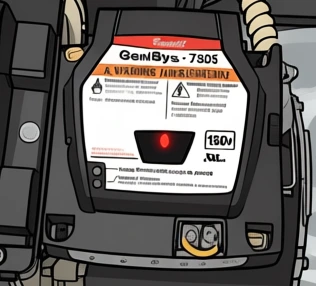
The control is reporting that it still can’t prove flame. The realistic causes sit in three buckets, and every one of them is diagnosed with instruments, not guesses:
- No fuel reaching the fire: clogged filter or strainerstrainerA mesh filter inside the fuel pump that catches debris. It is cleaned or replaced as part of a tune-up., gelled or waxed oil in a cold outside line, a failing pump, air leaks in the suction linesuction lineThe oil line the pump draws fuel through from the tank. An air leak here causes hard starts and lockouts., sludge from a low tank.
- Fuel but no spark: worn or mis-gapped electrodeselectrodesThe pair of ceramic-insulated rods that arc a high-voltage spark to light the oil spray., a cracked porcelain insulator, a weak igniterigniterThe modern solid-state replacement for the ignition transformer, doing the same job of firing the spark./transformer.
- Fire but no proof (the burner lit and then died): a sooted-over or mispositioned cad cellcad cellThe light sensor that proves a flame is burning. If it cannot see flame fast enough, the primary control locks the burner out. (the flame sensor), or a flame quality problem the sensor is right to reject.
A technician will check pump pressure, inspect and re-gap electrodes, test the cad cell’s resistance in light and dark, pull the filter, and, after any repair, run a combustion testcombustion analyzerThe instrument a technician uses to read the flue gases and tune the burner to spec. The part of a tune-up that cannot be eyeballed. with an analyzer to set the burner back to spec. That last step is the part that can’t be eyeballed, and it’s why “my neighbor got it running” repairs tend to come back as soot problems in February.
What the second lockout is not: a reason to keep cycling the button while the house gets cold. The fix is on the other end of a phone call.
What this repair typically costs
Ballparks as of 2026, varying by region and after-hours timing:
- Diagnostic / service call: roughly $100 to $250 to get a tech in front of the unit, often credited toward the repair.
- The common culprits are cheap parts. Nozzles, oil filters, and cad cells are each in the tens of dollars; with labor, a typical lockout fix lands around $150 to $400 total.
- Igniter/transformer replacement: more like $200 to $400 installed.
- If it happened right after a run-out: bleeding the line and changing the filter is quick work, and many dealers fold it into the delivery charge, ask when you order.
Many of these failures are exactly what an annual tune-up exists to catch: the nozzle, filter, electrodes, and cad cell are all replaced or checked as a matter of routine.
Prevention: why tune-ups make lockouts rare
A burner that locks out every January is not normal, it’s deferred maintenance announcing itself at the least convenient time. One tune-up a year (nozzle, filters, electrodes, cad cell, combustion test) removes nearly every cause on the list above before heating season starts. Pair that with not letting the tank run below a quarter in winter (a low tank is one of the causes the water in the tank guide names, and a de-aerator is the fix for a one-pipesingle pipeAn oil supply setup with one line from the tank to the burner pump. Simple, but it can trap air after a run-out, which is why a de-aerator helps. system that air-locks after every run-out), and the red button goes back to being a thing you forget your furnace has.
Parts behind this fault
Some links on this page are affiliate links: as an Amazon Associate this site earns from qualifying purchases, and it may earn from other retail partners, at no extra cost to you. Parts shown are general references, not specific endorsements. Match any part to your unit's make, model, and spec before buying.
- Oil absorbent padsA sheet of oil-only sorbent laid under the burner, filter, and pump. Check price on Amazon
- Oil filter and cartridgeCatches sludge and water before they reach the pump and nozzle. Check price on Amazon
- Oil fuel pumpPulls oil from the tank and pressurizes it to the nozzle. Check price on Amazon
- Fuel oil de-aeratorPurges air from the oil line so a one-pipe system self-bleeds after a run-out instead of locking out on air. Check price on Amazon
The other 9 parts a technician reaches for on this fault, with what each does and when it gets replaced: all oil burner parts by symptom.
Sources
- R.W. Beckett GeniSys 7505 primary control manual (lockout and reset behavior)
- Honeywell/Resideo R7184 interrupted-ignition oil primary documentation
- NFPA 31: Standard for the Installation of Oil-Burning Equipment