Oil furnace smells: is an oil smell in the house dangerous?
Updated 18 Oct 2026
Quick answer
A faint burnt-dust smell from an oil furnace or boiler at the first start of the season is normal and fades in hours. A persistent raw-oil smell, visible soot, or smoke is not: shut the burner off at the service switch and call a licensed technician. If a CO detector sounds or anyone feels ill, leave the house before you make the call.
On this page 8 sections
The 10-second triage
Find your situation, then act. When in doubt, the safe move is to shut the burner off at the service switch and call.
Nothing to do
| What you smell or see | What it usually means | What to do |
|---|---|---|
| Faint burnt dust at the first start of the season | Dust burning off the heat exchanger. |
|
Call for service soon
| What you smell or see | What it usually means | What to do |
|---|---|---|
| Faint oil smell at the unit only | A minor seep, a loose fitting, or a recent service. Not an emergency if it is faint and not growing. |
|
Shut the burner off at the service switch, then call
| What you smell or see | What it usually means | What to do |
|---|---|---|
| Strong raw-oil smell | Unburned oil from misfires, or a leak. |
|
| Smoke or soot anywhere | Incomplete combustion. |
|
Not your oil burner: leave, then call the gas utility
A rotten-egg or sulfur smell is natural gas or propane. Different fuel, different emergency number, and the only row here that is not about your oil burner.
| What you smell or see | What it usually means | What to do |
|---|---|---|
| Rotten-egg or sulfur smell | This is a natural-gas smell, not your oil burner. |
|
Leave the house first, then call from outside
| What you smell or see | What it usually means | What to do |
|---|---|---|
| A CO alarm, or headache, nausea, grogginess | Possible carbon monoxide. |
|
Why oil heat smells when it misfires
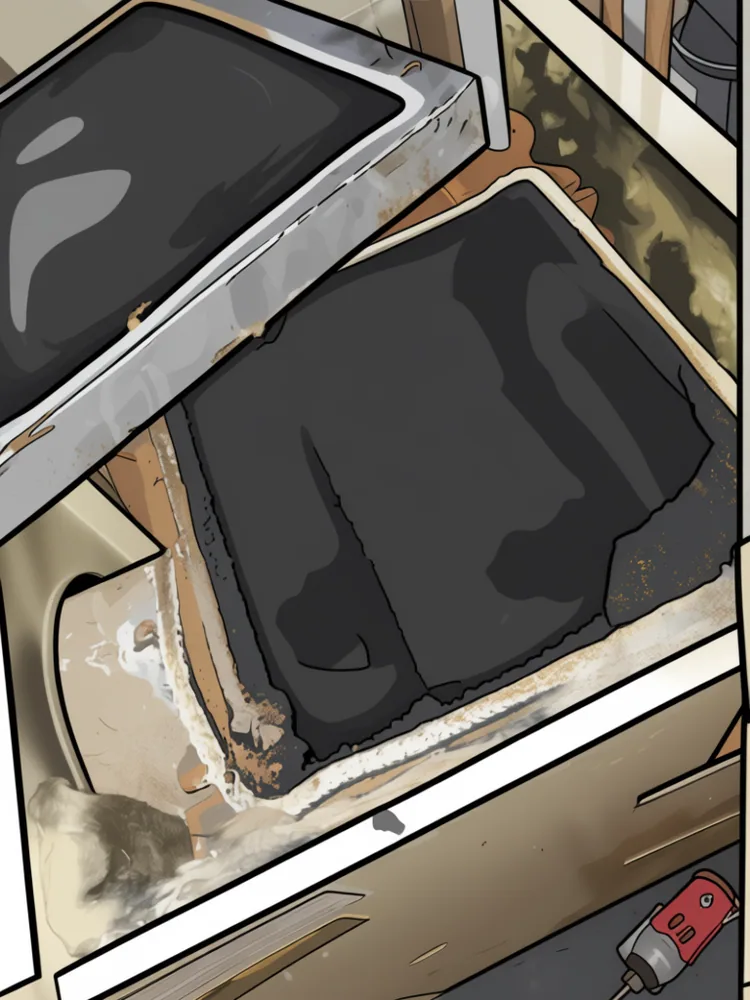
A healthy oil flame is nearly odorless once it is running. The smells show up when combustion is off: a burner that fails to light sprays oil that then evaporates, delayed ignition leaves a puff of unburned fuel, and a poor spray patternspray patternHow a nozzle spreads oil in the cone: hollow (A), solid (B), or semi-solid (W). The burner's spec calls for a specific one. or wrong draftdraftThe suction the chimney pulls through the burner. Too much or too little shows up as sooting, odor, or lost efficiency. makes a smoky, smelly fire. None of those are things to adjust yourself, and this is the one place we stop short of telling you how: tuning combustion needs a combustion analyzercombustion analyzerThe instrument a technician uses to read the flue gases and tune the burner to spec. The part of a tune-up that cannot be eyeballed. and the training to read it, and a wrong adjustment makes carbon monoxide. The smells are described here so they make sense, the fix is a combustion setup, which is technician work.
Smells after a run-out or a delivery
Some oil smell right after a run-out or a delivery is expected: the line has been opened or bled, sediment was disturbed, and the fill pipe area can smell for a bit. It should fade within a day. A smell that grows, or one paired with the burner short-cycling or locking out, is not just leftover odor, that is a misfire and a reason to shut down and call.
Soot is a message
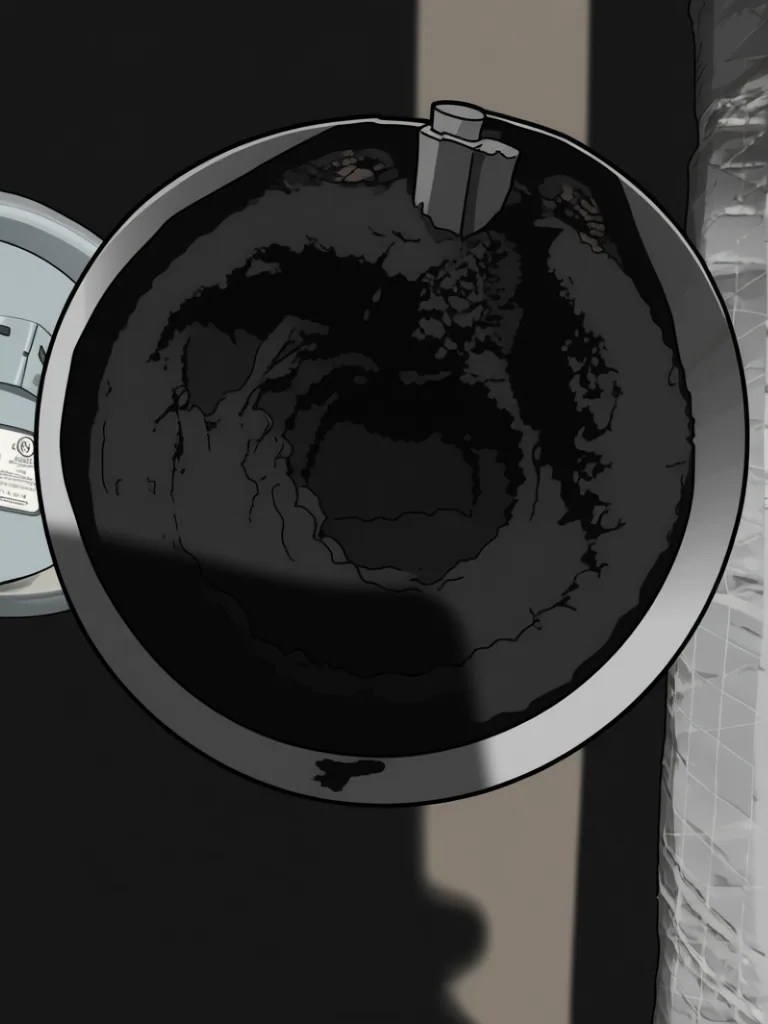
Soot on the unit, on the registers, or as a fine black film on the walls and ceiling means combustion has been incomplete for a while. Even if the house is heating, that is always a service call: it points at a draft or combustion problem, it is a puffbackpuffbackA sudden ignition of oil that pooled after failed starts. It can blow the flue apart and coat a house in oily soot, which is why you never stack resets. risk, and it gets more expensive the longer it runs. A puffback (a sudden ignition of pooled oil) can coat an entire house in oily soot and turn into a five-figure cleanup.
A drip under the unit
A few drops can be condensation or a weeping filter gasket; a spreading wet spot, a steady drip, or the smell of oil in the puddle is an active leak. Slide a pan or some cardboard under it to see whether it is growing, and call. Do not start tightening fittings yourself; a fuel fitting under pump pressure is not a place to guess. If the leak is at the tank, treat it as urgent, a tank leak is both a heating problem and an environmental cleanup, and the sooner it is caught the smaller it is.
CO: the danger you cannot smell
Carbon monoxide has no odor. The smells above are your early warning that combustion is off, but CO itself you will never smell, which is why detectors are the real protection, not your nose.
- Put a CO alarm on every level of the house and near sleeping areas.
- Test them at the start of the heating season and replace the batteries.
- CO alarms expire; most are good for seven to ten years, then the sensor is done. Check the date on the back.
- If an alarm sounds or anyone has headache, nausea, or grogginess that improves outdoors, leave first and call from outside.
What the technician does
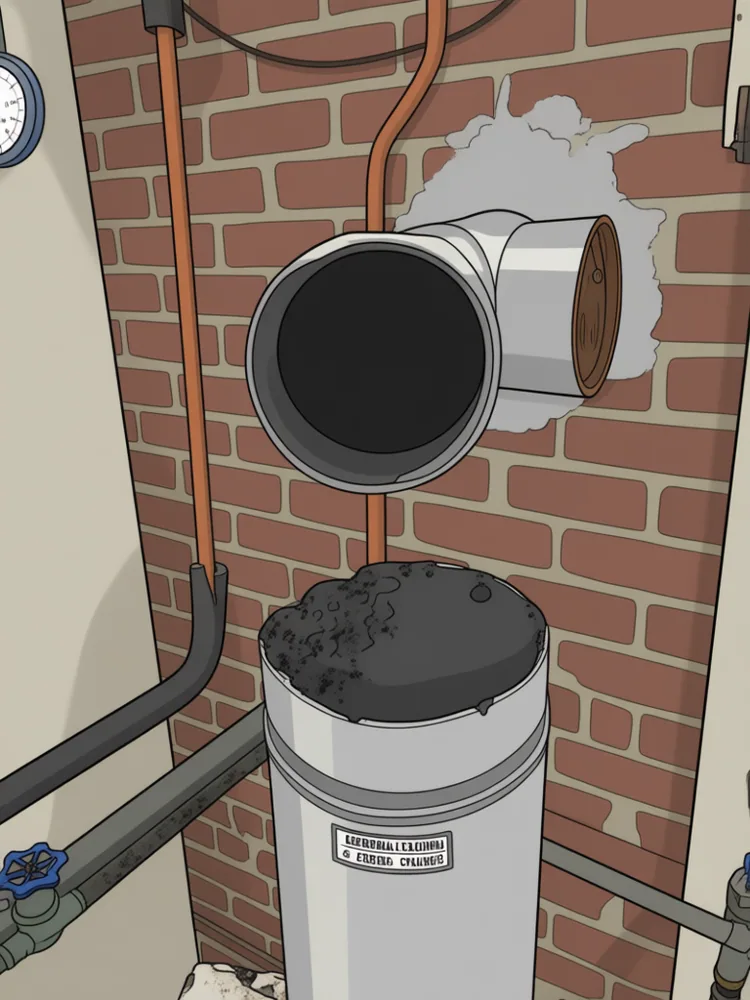
A service visit for odor or soot is a combustion job: a combustion test with an analyzer, a draft check, an inspection of the heat exchangerheat exchangerThe metal chamber that passes combustion heat into your home's air or water while keeping the fumes separate. A crack in it is a carbon monoxide hazard. and flue for leaks or blockage, and nozzlenozzleThe precision tip that atomizes oil into a fine spray for burning. It is sized by flow rate, spray angle, and pattern. and electrodeelectrodesThe pair of ceramic-insulated rods that arc a high-voltage spark to light the oil spray. service to clean up the fire. The parts behind this are usually the nozzle and a draft component, but the diagnosis is the combustion test, which is the part that cannot be eyeballed.
Parts behind this fault
Some links on this page are affiliate links: as an Amazon Associate this site earns from qualifying purchases, and it may earn from other retail partners, at no extra cost to you. Parts shown are general references, not specific endorsements. Match any part to your unit's make, model, and spec before buying.
- Oil burner nozzleAtomizes the oil into a fine spray for combustion. Check price on Amazon
- Barometric draft damperThe hinged flue damper that stabilizes draft over the burner. Check price on Amazon
- Carbon monoxide alarmSounds when carbon monoxide builds up. Check price on Amazon
What each one does and when it gets replaced: all oil burner parts by symptom.
Sources
- NFPA 31: Standard for the Installation of Oil-Burning Equipment
- U.S. CPSC carbon-monoxide safety guidance