Water in your oil tank: how it gets there and what to do
Updated 18 Oct 2026
Quick answer
Water gets into an oil tank mostly from condensation, and it sinks below the oil where it breeds sludge, rusts the tank from the inside, and clogs filters (or freezes an outside line). Check for it by sticking the tank with water-finding paste on the stick; if there's more than a trace, have the tank pumped and treated, and fix the cause (caps, a low summer tank).
On this page 6 sections
How water gets into a sealed tank
It seems impossible that a closed steel tank fills with water, but it is routine, and the main source is condensation. Air carries moisture, and as a partly full tank breathes with the day’s temperature swings, water vapor condenses on the cool upper inside walls and runs down. Because water is heavier than oil, it sinks straight to the bottom and pools under the fuel, right where the pickup and the filter draw from.
The other ways in are simpler: a missing, cracked, or loose fill or vent cap that lets rain or snowmelt in, a vent without a proper cap, or occasionally water that rode in with a delivery. An outdoor tank, swinging through bigger temperature changes, makes more condensation than a basement one.
A buried (underground) tank has one more route, and a more serious one: a failed tank. If the shell has rusted through below the water table, groundwater under hydrostatic pressure can be pushed in through the breach. So on an underground tank, finding water is not just a condensation nuisance, it can be the first sign the tank itself is leaking and needs a tank specialist, not just treatment (see the underground-tank cautions in the tank replacement guide).
What water does down there
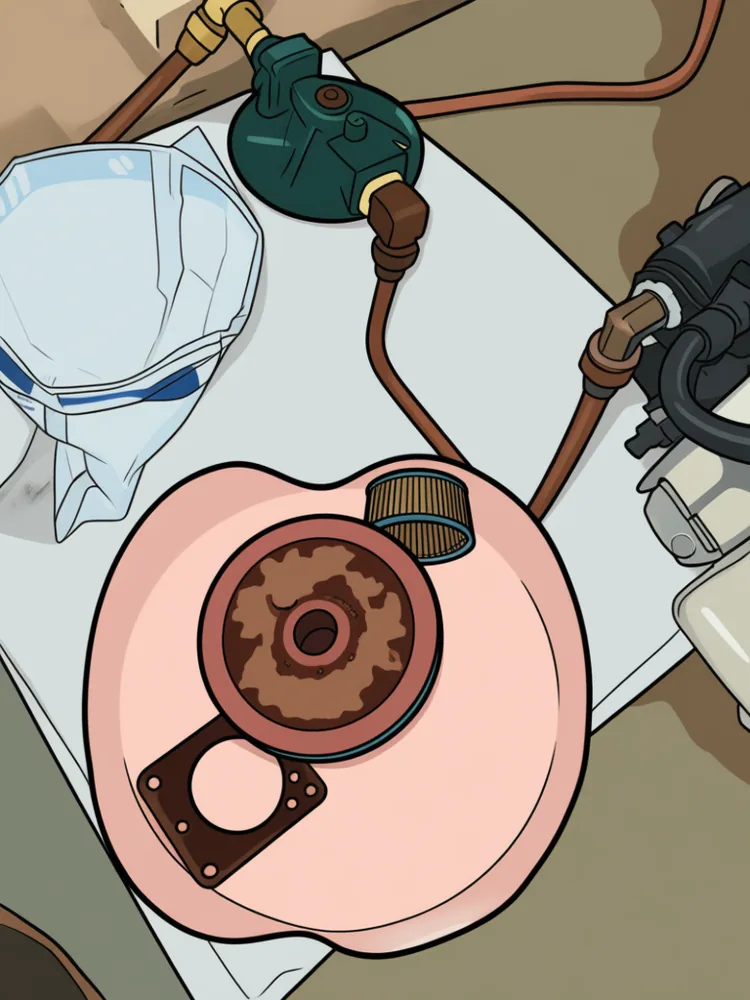
- Sludge. The boundary between the oil and the water is where microbes grow, and they leave a black, slimy sludge that coats the tank bottom and plugs filters.
- Rust. Water against bare steel rusts the tank from the inside out, which is how most steel tanks fail (see the tank replacement guide).
- Clogged filters and starved burners. Sludge and water pulled toward the pickup choke the filter and can stall the burner, looking like a dozen other faults.
- Frozen lines. On an outdoor tank or an outside line, pooled water can freeze and block the line in a cold snap, a no-heat call that thaws and “fixes itself,” then comes back.
How to check for water
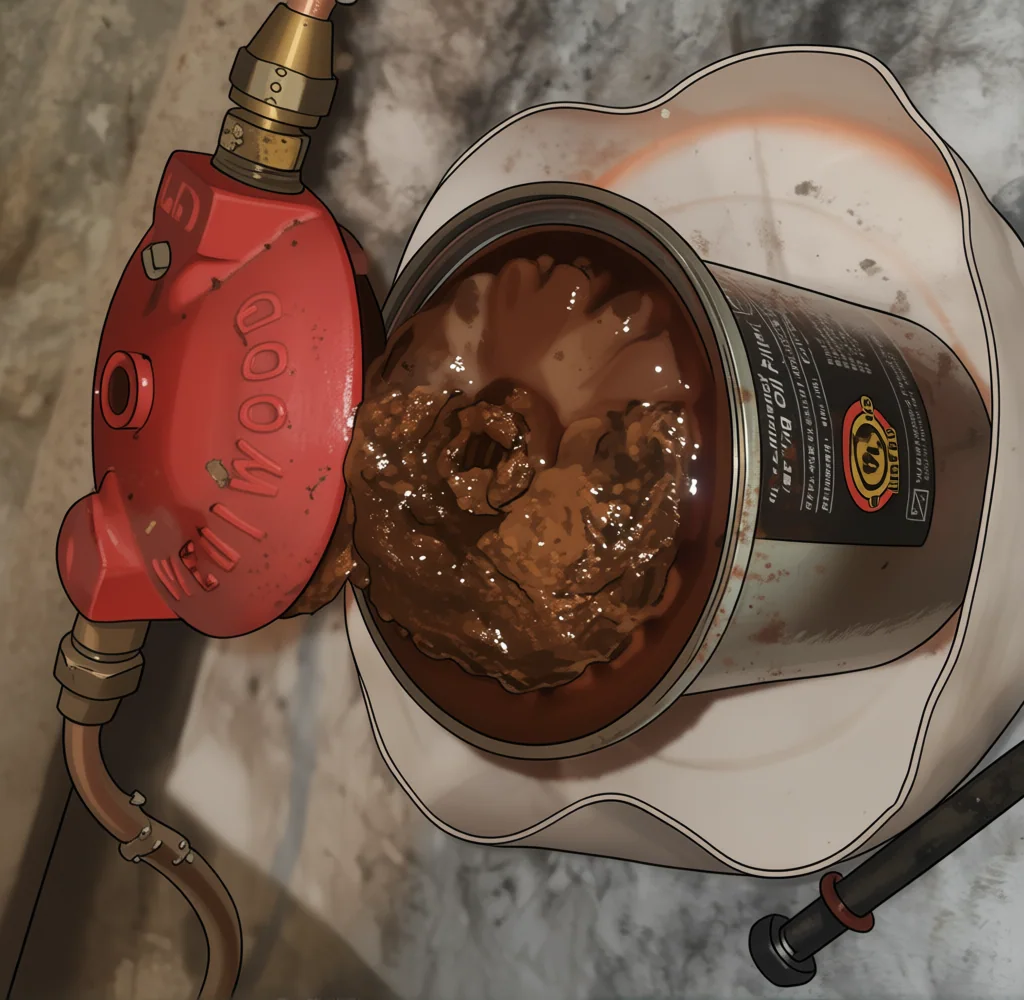
The reliable way is to stick the tank with water-finding paste on the end of the stick:
- Smear a band of water-finding paste on the bottom few inches of a clean gauge stick (the same stick you use with the tank chart).
- Lower it to the tank bottom, hold a few seconds, and pull it out.
- The paste changes color exactly where it touched water, so you can read the water depth separately from the oil line above it.
A trace (a fraction of an inch) is common and usually managed with treatment. More than that, or recurring water, calls for having the tank professionally pumped and cleaned.
What to do about it
- A trace: an oil tank treatment additive that disperses water and controls the microbes and sludge, used per its label, keeps a small amount in check.
- More than a trace, or sludge: have the dealer or a tank service pump the water and sludge out and clean the tank. Do not try to drain a tank bottom yourself; it is a fuel and disposal job.
- Fix the cause: replace missing or bad fill and vent caps, make sure the vent has a proper cap and whistle, and address an outside line that keeps freezing.
Keeping water out

- Keep the tank full over the summer. A full tank has little air space to breathe and condense, so topping off in spring is the single best prevention, the opposite of letting it ride empty until fall.
- Good caps, sealed. A sound fill and vent cap keeps rain and snowmelt out.
- Treat seasonally if your tank has a history of water or sludge.
- Watch for the symptoms: repeated filter clogs, an outside line that freezes and thaws, or a burner that starves intermittently are all worth a paste check.
Parts behind this fault
Some links on this page are affiliate links: as an Amazon Associate this site earns from qualifying purchases, and it may earn from other retail partners, at no extra cost to you. Parts shown are general references, not specific endorsements. Match any part to your unit's make, model, and spec before buying.
- Oil tank float gaugeThe dial on top of the tank that shows the oil level on a float. Check price on Amazon
- Tank vent whistleThe vent fitting that whistles while the tank fills and goes silent when it is full, so a delivery does not overfill. Check price on Amazon
- Tank fill and vent capsCaps that seal the fill and vent pipes so water and debris stay out of the tank. Check price on Amazon
- Oil absorbent padsA sheet of oil-only sorbent laid under the burner, filter, and pump. Check price on Amazon
The other 8 parts a technician reaches for on this fault, with what each does and when it gets replaced: all oil burner parts by symptom.
Sources
- Oil-heat industry guidance on tank water and microbial sludge
- U.S. EPA guidance on residential heating oil tanks
- Manufacturer documentation (Granby, Roth) for residential tanks