AF / AFG
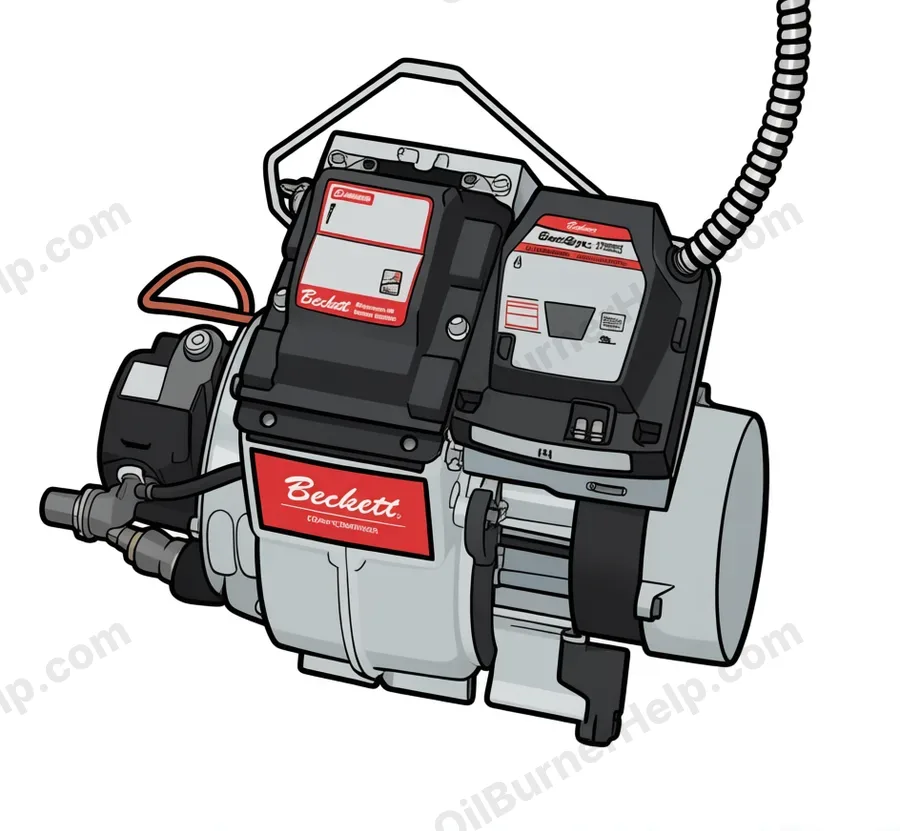
Flame-retention gun burner (the workhorse residential line; AFG is the flame-retention version of the AF chassis).
Source: beckettcorp.com AF/AFG product page; AF/AFG Burner Manual Form 6104 (default 100 psig confirmed in Form 6104).
R.W. Beckett Corporation (North Ridgeville, Ohio, founded 1937) makes the most common residential oil burners in North America; the AF/AFG is the workhorse line, and this page decodes its control lights, lists the sourced setup specs, and shows what a technician checks.
Some links on this page are affiliate links: as an Amazon Associate this site earns from qualifying purchases, and it may earn from other retail partners, at no extra cost to you. Parts shown are general references, not specific endorsements. Match any part to your unit's make, model, and spec before buying.
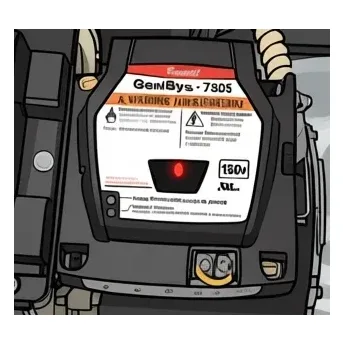
Three lights: a red light in the reset button, a green light and a yellow light. Read which light is on and whether it is steady or flashing. There is no blink count.
| Indication | What it means |
|---|---|
| Red light flashing | Soft lockout. The burner shut down on safety. The usual reasons are no flame during the trial for ignition, flame seen when there should be none, or flame lost while running. Press the reset button once, about one second. If it locks out again, stop and call. |
| Red light steady ON | Hard (restricted) lockout. The control locked out repeatedly, or failed its relay check, and stopped to keep unburned oil out of the chamber. A technician has to find the cause first. The reset is a 15 second hold of the button until the red light goes out and the yellow light comes on. |
| Green light flashing | Recycle. Flame was lost while the burner was running. The control waits about 60 seconds and tries again on its own. Repeated recycles end in lockout. |
| Green light steady ON | Flame sensed. This is the normal running light. If it is on while the burner is idle, the cad cell may be seeing stray light. |
| Yellow light steady ON | Pump prime mode, or the reset button has been held 15 seconds or more. Not a fault. The yellow light goes out when priming ends or the button is released. |
Source: R.W. Beckett GeniSys 7505 Installation & Operation Manual, Form 61649 (beckettcorp.com)
Replacement control: 7505A0000U Amazon ↗ Pro install Confirm the part-number suffix against the control on your burner. Often with: nozzle, pump strainer (in the tune-up kit), cad cell
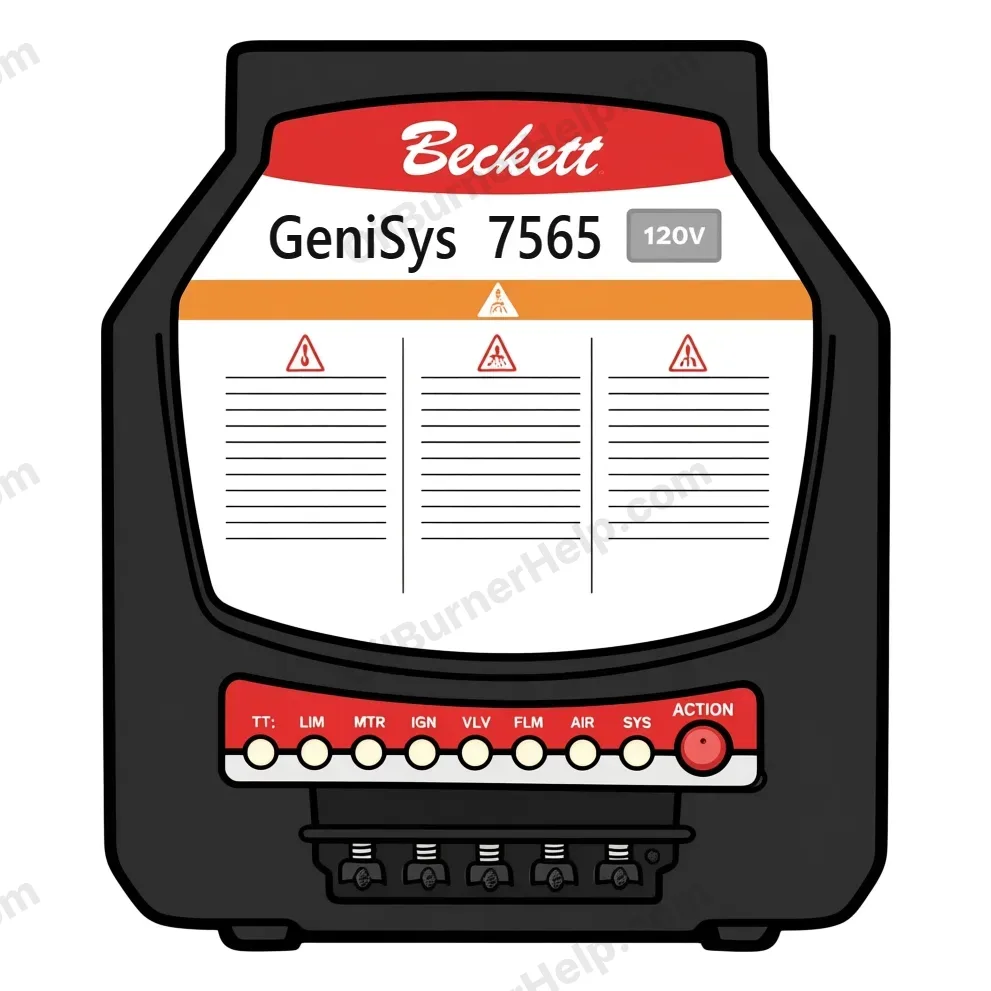
Eight named lights in a row (TT, LIM, MTR, IGN, VLV, FLM, AIR, SYS) and an ACTION button in place of a plain reset. Green is normal. Red is a fault. Yellow is a special state. SYS is the overall status light. The VLV and AIR lights only work when a valve or an air switch is installed.
| Indication | What it means |
|---|---|
| SYS green | Power on. |
| SYS yellow, steady | Pump prime mode. The motor, igniter and valve run for the prime window. Not a fault. |
| SYS yellow, flashing | Recycle. Flame was lost, or a pressure or spill switch opened while firing. The control waits about 60 seconds and tries again, up to three times. |
| SYS red, flashing | Soft lockout. Press the ACTION button once, about one second. If it locks out again, stop and call. |
| SYS red, steady | Hard (restricted) lockout. The control kept locking out, or failed its relay check, and stopped to keep unburned oil out of the chamber. A technician finds the cause first. The reset is a 15 second hold of the ACTION button. |
| FLM green | Flame present. |
| FLM red | No flame detected. |
| FLM yellow | Flame seen out of sequence, or a shorted cad cell. |
| AIR green | The installed air switches are closed. |
| AIR red | Blocked flue. |
| AIR yellow | Inlet air fault. |
| MTR, IGN or VLV red | A fault on that part: the motor, the igniter or the oil valve. |
| TT green | The thermostat is calling for heat. |
| LIM green | The limit circuit is closed. |
Source: R.W. Beckett GeniSys 7565/7585 manual, Form 62255-001 (beckettcorp.com).
See the full error-code database for every control.
Installing burner parts and setting combustion is licensed-technician work; these numbers are for sourcing the right part. The first row is the complete burner, for a replacement or a spare; match the model, the air tube length and the firing rate to the appliance.
Some links on this page are affiliate links: as an Amazon Associate this site earns from qualifying purchases, and it may earn from other retail partners, at no extra cost to you. Parts shown are general references, not specific endorsements. Match any part to your unit's make, model, and spec before buying.
A fuel line below that names a B-number is a biodiesel blend rating: see what the Bioheat B-numbers mean and B20 problems: gelling, filter clogs, and old equipment.
Flame-retention gun burner (the workhorse residential line; AFG is the flame-retention version of the AF chassis).
Source: beckettcorp.com AF/AFG product page; AF/AFG Burner Manual Form 6104 (default 100 psig confirmed in Form 6104).
Compact flame-retention gun burner for the low end of the residential range (separate chassis from AFG, not a replacement for it).
Source: Beckett bulletin 'Getting to Know the Model AFII Burners' (beckettcorp.com); AFII manual Form 6104BAFII.
Newer-generation residential flame-retention burner; combines air and head into a single adjustment.
Source: beckettcorp.com NX product page (product sheet 61648).
Higher-output residential / light-commercial flame-retention burner sharing AF design features.
Source: beckettcorp.com SF product page.
Residential flame-retention burner with F-style retention head; shares Beckett's standard electrode setting with AF/AFG/SF/SM.
Source: beckettcorp.com 'Standardizing Electrode Settings' bulletin context (firing range unresolved from a dedicated SR page).
Electrode gap and position are among the checks in the annual tune-up checklist.
Source: Beckett bulletin 'Standardizing Electrode Settings' (May 15, 2002), beckettcorp.com. The Beckett Z gauge sets all three at once.
The most common burner in North America. The GeniSys 7505 reports with a red light in the reset button plus a green and a yellow light. A soft lockout clears with a one second press. A hard (restricted) lockout needs a 15 second hold, and the cause should be found first. There is no blink count. The 7565 and 7585 have a row of eight named lights (TT, LIM, MTR, IGN, VLV, FLM, AIR, SYS) and an ACTION button.
Brand reference source: R.W. Beckett GeniSys 7505 manual (Form 61649 / spec Form 61658); GeniSys 7565/7585 manual Form 62255-001.
https://oilburnerhelp.com/burners/beckett/